We're having a field day!

The Wetlands Initiative’s Smart Wetland Team along with our partners Marshall-Putnam Soil and Water Conservation District and McCuskey Farms invite you to attend a field day on June 29, 2023, at the first Smart Wetland in Marshall County, IL.

This wetland was built during the COVID shutdown in 2021 and now that it is operational, the partners are inviting the public to stop by on June 29, 2023 to stop be and see one of the newest Smart Wetlands.

May 30, 2023
FOR IMMEDIATE RELEASE:
See How a Smart Wetland Reduces Excess Nutrients from Illinois Waters
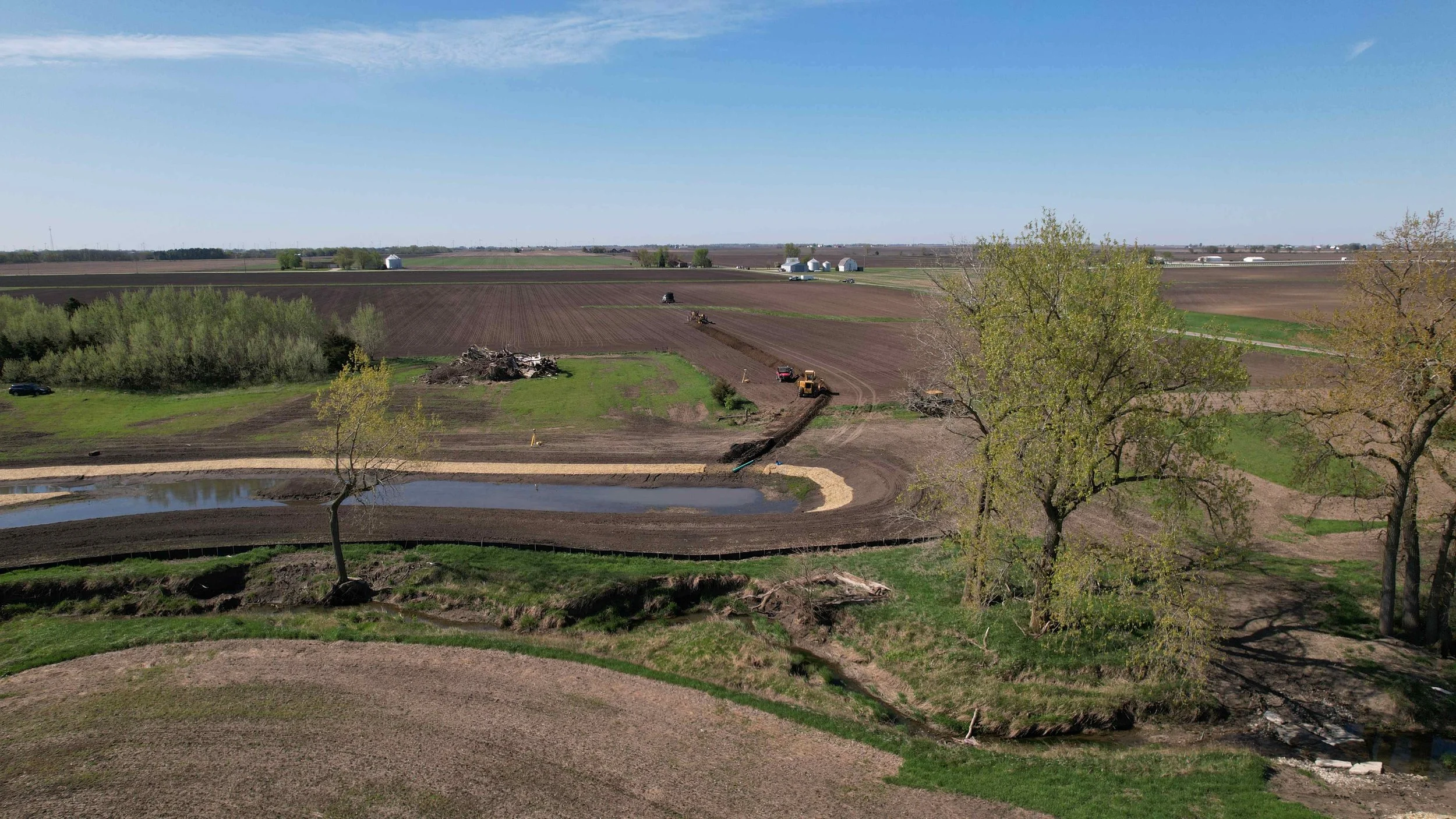
Marshall County, IL -- Two years ago, this Marshall County farm field looked like most of Illinois’ 12
million acres of tile-drained cropland. But, in September 2021, a local contractor moved over 6,000 cubic
yards of earth here to create a Smart Wetland. You are welcome to see the resulting tile-treatment
wetland at a field day on Thursday, June 29, and learn about the wetland’s naturally occurring processes
that break down the nitrate in the ag tile drainage before the water flows into nearby water bodies.

Smart Wetlands are specifically located and custom-designed constructed wetlands to fit within today’s
farming operation to remove nutrients. MK Farm Drainage Specialists built the 1.83-acre wetland at
McCuskey Farms under the direction of the Marshall-Putnam Soil and Water Conservation District (M-P
SWCD) and the Wetlands Initiative (TWI) through their Smart Wetlands program. Martin McCluskey
owns the farm, and Rex Newton has farmed it for over 30 years.

The free field day is co-hosted by TWI, McCuskey Farms and M-P SWCD. Rex Newton, staff from M-P
SWCD and TWI, along with other organizations that support sustainable ag and conservation practices
will be on hand to answer questions The public, especially farmers, farmland owners, and agribusiness
professionals, are invited to visit the site between 11 am and 2 pm on June 29. A free lunch will be
served at noon along with presentations on various sustainable concepts and an update on the US Farm
Bill.

In addition, there will be an event later in the day from 4–7 pm for the public, conservation
professionals, and hunters interested in seeing how this practice with native marsh vegetation can
provide habitat for wildlife, waterfowl, and pollinators and recreational opportunities for landowners on
their property. M-P SWCD and TWI staff, along with other conservation professionals will be on hand to answer questions. Snacks and drinks will be served.

The Smart Wetland installation site is located west of Henry, IL, near the intersection of Marshall County Road 500 East and County Road 1400 North, along the Scholes Branch Creek.
Media Advisory: To arrange interviews with Rex Newton, farmer; Jill Kostel, wetland designer; or Jill Ketter, M-P SWCD, please get in touch with Jean McGuire, TWI Field Outreach Specialist, 515-520-3036, or Stacy Williamson, Marshall-Putnam SWCD Administrative Coordinator at 309-364-3913 x3. In addition, details about the field day will be available at: https://www.smartwetlands.farm/smartwetland5

This event is supported by the National Institute of Food and Agriculture, U.S. Department of Agriculture, under agreement number 2022-38640- 37486 through the North Central Region SARE program under project number LNC22-465. USDA is an equal opportunity employer and service provider. Any opinions, findings, conclusions, or recommendations expressed in this publication are those of the author(s) and do not necessarily reflect the view of the U.S. Department of Agriculture.

We're hiring a Freelance social media manager

Applications are being accepted through June 30, 2023, for a social media manager to administer the Smart Wetlands Program outreach and education campaigns on its social media platforms. The Smart Wetlands program is focused on designing and implementing tile-treatment wetlands to reduce nutrient runoff from cropland. The ideal candidate will have a strong background, knowledge, and experience with Illinois agricultural, farming, and conservation practices.

Full details are available here.

The resident “Three Bachelors” taking a leisurely swim around the Smart Wetland at Illinois Central College, East Peoria, IL.

More Water Runs to It

Even though the Smart Wetland at Feather Prairie Farm was constructed in August 2022, it is now fully operational after another ag tile drainage line was added to it earlier this month.

For those not familiar with agricultural tile drainage, it is a system that removes excess water from the soil under farmland. Removing excess water allows for easier planting and harvesting, improved soil conditions for crop growth, and allows farmers more control over scheduling fieldwork.

The second line was installed at the west end of the wetland. It was connected to tile lines in the field south of the wetland. There were a few surprises. Seven unmapped tile lines were discovered in the process of connecting the tile main to the wetland. However, Trent, Travis, and Titus from Double S Tiling quickly connected them to the system, and soon more water was trickling into the wetland.

Here are some photo highlights of the process.

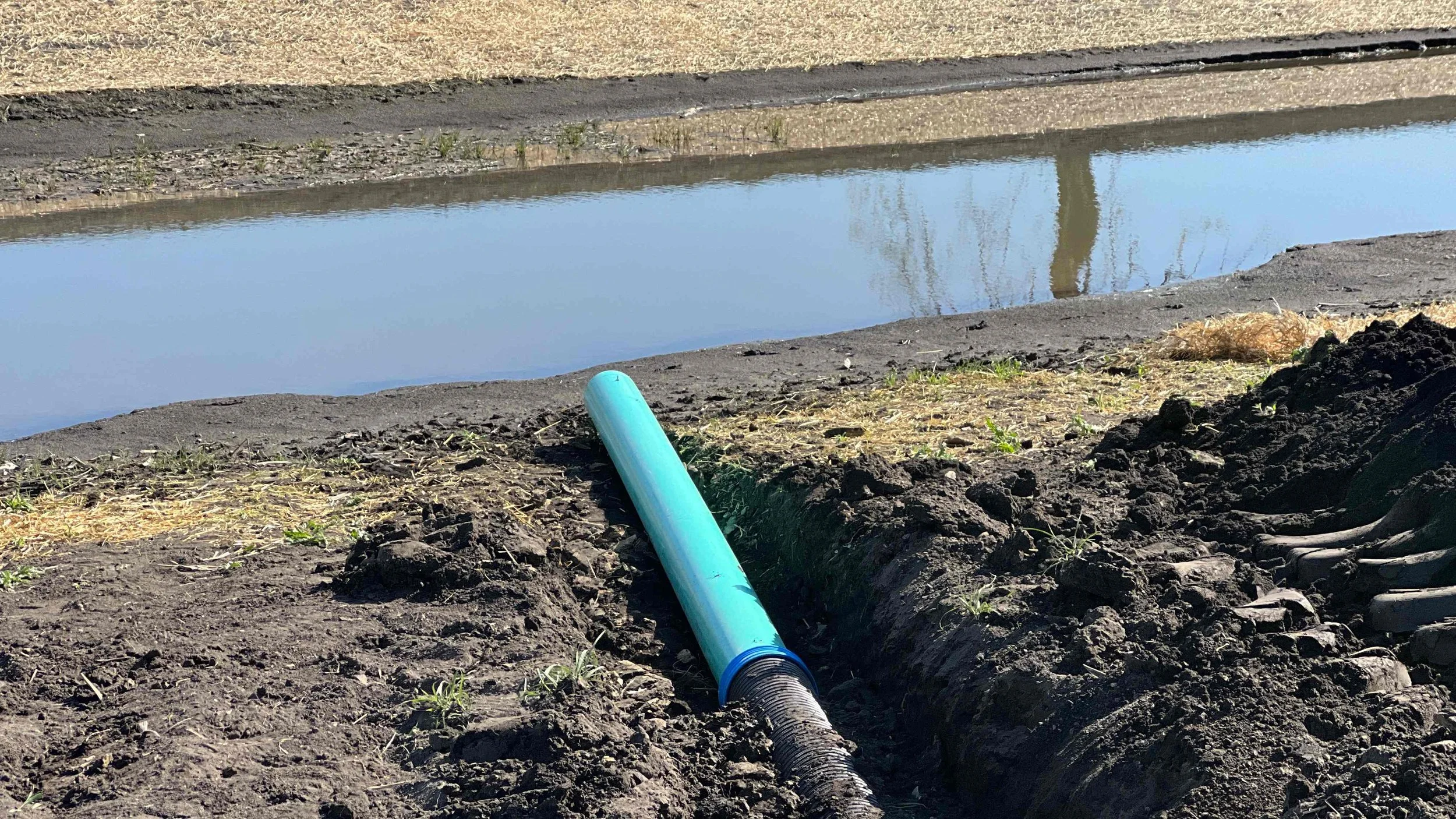
The crew started at the wetland by installing the solid outlet pipe (blue). Then they connected it to the beginning of the black, plastic, corrugated, and perforated pipe that would be buried from that location across a field and connected to the main ag drainage tile line that would supply the water that will flow into the wetland.

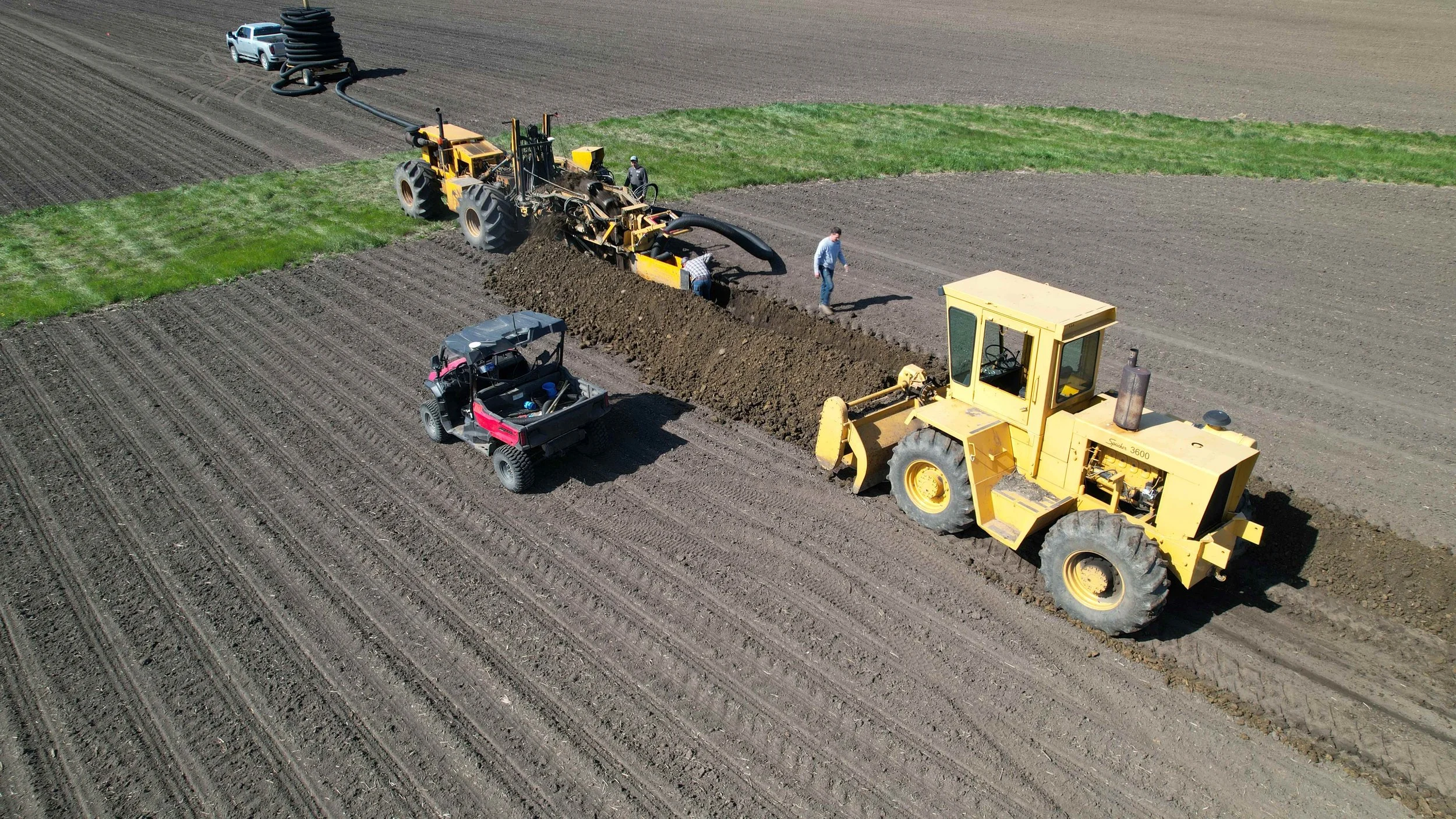
Bird’s eye view of the Double S crew laying perforated corrugated plastic pipe from the wetland to the main tile line in the nearby field.

The pickup truck at the top of the photo is pulling a spool of perforated, corrugated plastic tile. The tiling machine (partially parked on the grass) digs the channel and inserts the tile into that channel. The machine in the rear then pushes the earth back into the channel covering the newly deposited tile.

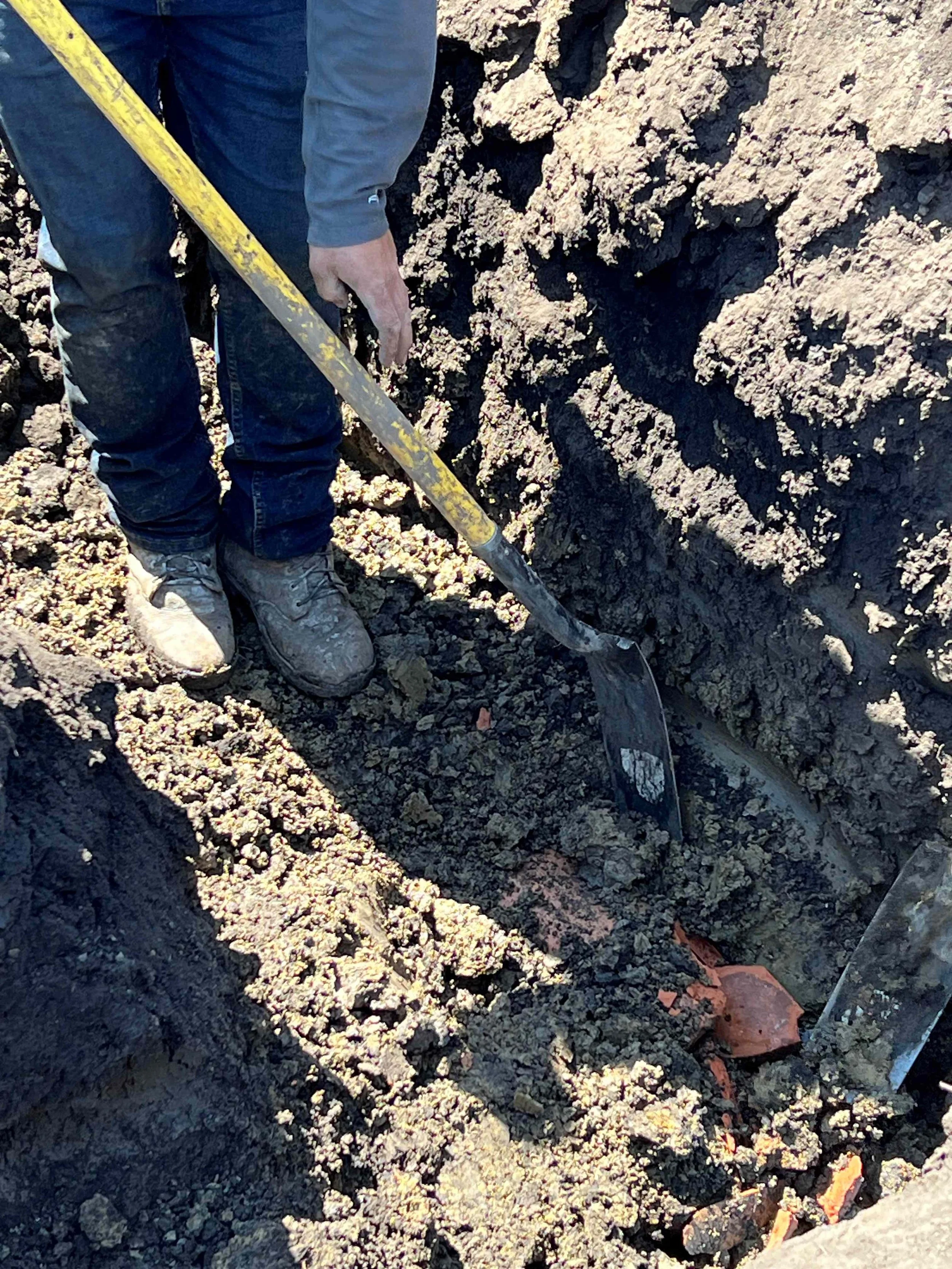
The crew then used a backhoe and shovels to access the original clay tile line to prepare it for connection to the newly-laid plastic tile line.

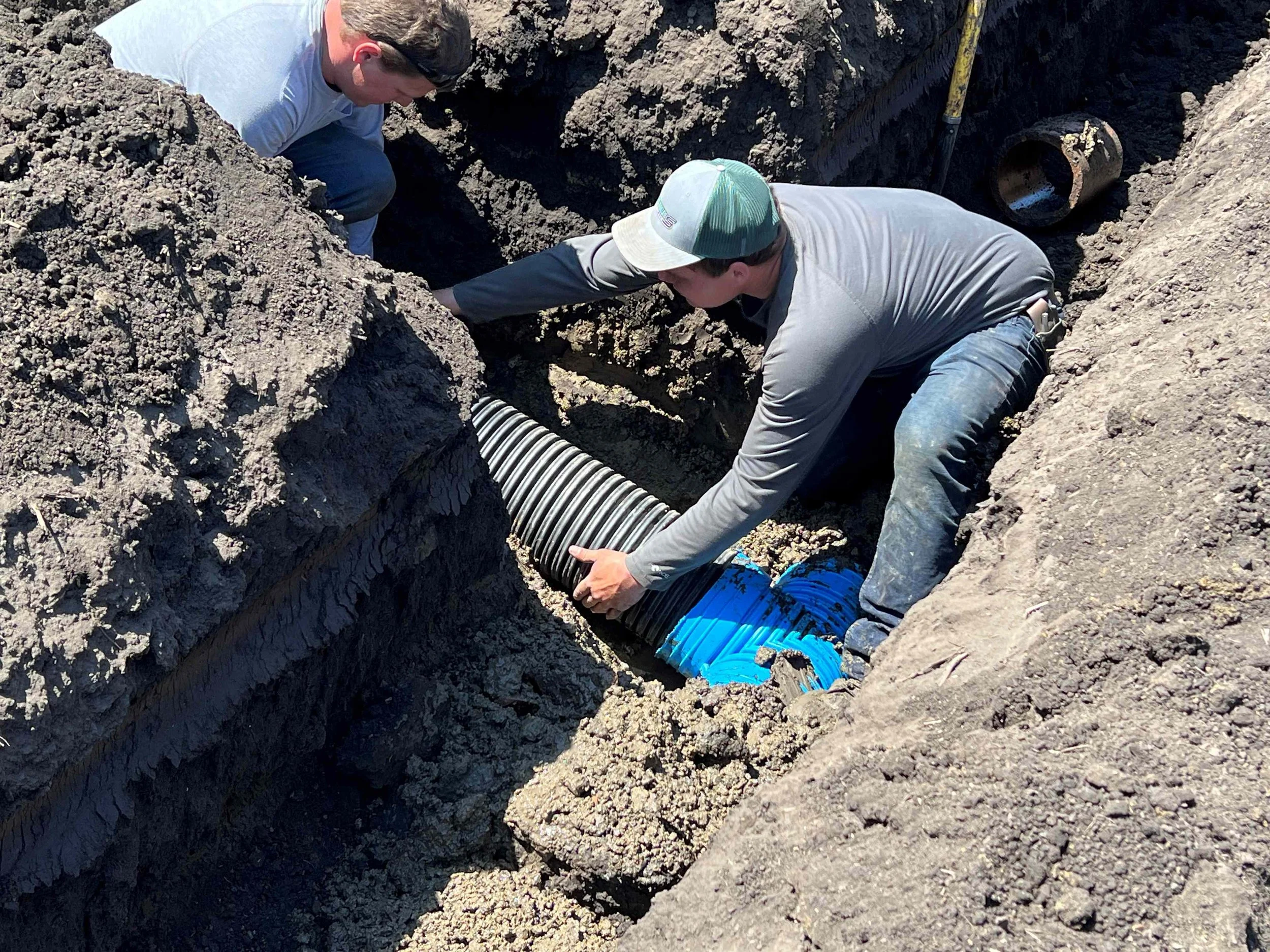
Titus and Travis connect the original clay tile system to the newly laid tile line and within minutes water was flowing into the wetland.

It is starting to look like a Smart Wetland!

Six months ago, we worked with several partners to build two wetlands at Feather Prairie Farm near Dwight, IL. The construction process was impressive. Over 5,000 cubic yards of earth were moved and precisely shaped into a wetland in a few days. Our partners at the Illinois Land Improvement Contractors Association, the builders of most of our wetlands, make it look so easy. However, looking at all that newly moved soil doesn’t allow the wetland’s actual shape to be easily seen up close or even from above. However, once water fills a new wetland, its features are clear.

Since all of our wetlands are designed and built to account for the existing landscape at a particular location, Dr. Jill Kostel, our wetland engineer, uses her expertise to develop a plan that takes advantage of the existing landscape. In the case of the Feather Prairie Farms wetland, the right design required a much narrower curving layout to be built than any of our previous wetlands. In addition, it includes a couple of islands to ensure that the nitrogen-laden ag tile drainage water moves through the wetland slowly enough to encourage the breakdown of nitrate.

This photo was taken on Feb. 18, 2023 at Feather Prairie Farm near Dwight, IL. The Smart Wetland is the large waterbody in the center of the photo. The small waterbody in the upper left is a small pond and the darker area in the foreground of the photo shows the smaller second wetland scrape.

While the wetland was built in August of 2022, there are still finishing touches being added in 2023. Currently, one tile system is draining into the wetland from the east (left side of photo), and another system will be connected to the wetland from the southwest (right side of photo) in the next few months. Once that drainage system is linked, the wetland could treat water from 60 acres of cropland.

The wetland and buffer have been frost-seeded. In late May or early June, various  water-loving plant plugs and bulbs will be installed in the wetland. As the bulbs and plants grow and get established, the water levels will be slowly increased. These plants will support the bacteria needed to break down the nitrate. We will be providing updates on those changes as they occur this year. Also, we will be doing another blog post about the second wetland (dark area in the foreground of the photo) at this location in the future.

Feather Prairie Farms wetlands immediately after construction, August 2022.

Feather Prairie Farms before wetland construction, July 2022.

Jean McGuire is the Field Outreach Specialist for our program and the face of TWI in the counties where we work. She works with our partners to identify landowners who may have an interest in building a Smart Wetland on their property. She was raised with seven siblings on a row crop-livestock farm which they now co-own and farm.

The Mississippi River Network provided support for developing this blog. Consider becoming a River Citizento help “clean up and protect our country's greatest River.”

The proof is in the wetland! Water quality monitoring shows Smart Wetlands’ effectiveness

The ability of wetlands to improve water quality in different applications (e.g., municipal, industrial, and agriculture) has been well-studied. The research has shown that wetlands, particularly treatment wetlands, are very effective at removing excess nutrients, herbicides/pesticides, heavy metals, etc. While I love reading and diving deep into this research, it is not necessarily exciting reading to our farmers. They are more interested in seeing firsthand a tile-treatment wetland on a local working row-crop farm and the proof that this investment is working as promised.

So, we have been partnering with professors and students at local universities and colleges to monitor the water quality going into and out of three Smart Wetlands that we designed and implemented with our landowners. We have nine years of monitoring data between the three wetlands.

To evaluate nutrient removal, we take samples for nutrient concentrations at the inlet and outlet of each wetland and measure the water flow. With these two measurements, we can calculate nutrient mass or pounds of nitrate and phosphorus removed by the wetland. Several parameters can impact nutrient removal, such as the inlet concentration, flow rate (impacted by rainfall), temperature, wetland age, soil organic carbon, plant community development, flow pattern, etc. Below are just a few results highlights comparing the three monitored wetlands with some short explanations. Check in with this website and Smart Wetlands’ social media in the future to see more data being presented and research findings explained.

TWI designed and implemented two wetlands in Bureau County, “BC1” in 2015 and “BC2” in 2016. In partnership with the University of Illinois-Chicago (UIC), water quality monitoring began the following spring or summer as the wetland plant community entered its first growing season.

Flow was monitored continuously and water quality samples were taken at the inlet and outlet daily. While both wetlands successfully remove nitrate-nitrogen, there are differences between the two wetlands in terms of efficiency (Figure 1A) and amount of mass removed (Figure 1B). The differences can be attributed to design and site factors.

The BC1 and BC2 wetland sites are similar in size; however, the treatment area of BC1 is around 1% of the contributing drainage area, whereas BC2’s treatment area to contributing drainage area is 3.6%. BC1 had upland soils as its base media growth, whereas BC2 had a hydric soil base (wetland/saturated soil) that was more carbon-rich, allowing more denitrification to occur right from the start. As the carbon levels built up in BC1 after each growing season, its removal efficiency increased, except in the fall of 2017 when the wetland dried up and the carbon was released as CO2 to the atmosphere. BC2 has never dried up due to a more consistent inlet flow throughout the year, particularly in the summer, so its carbon level continued to increase.

Figure 1A. Nitrate-nitrogen removal efficiency for BC1 (blue bars) and BC2 (green bars) over the sampling years.

Figure 1B. The total amount of nitrate removed in pounds

In 2019, a TWI-designed tile-treatment wetland was installed on Illinois Central College’s Demonstration Farm on the East Peoria campus. Its soil base was upland soils. Through a collaboration between TWI, ICC, Illinois Corn Growers, Waterborne Environmental, and Illinois State University, rigorous data collection began in 2021 for the tile-treatment wetland. To date, data has been analyzed through May 2022.

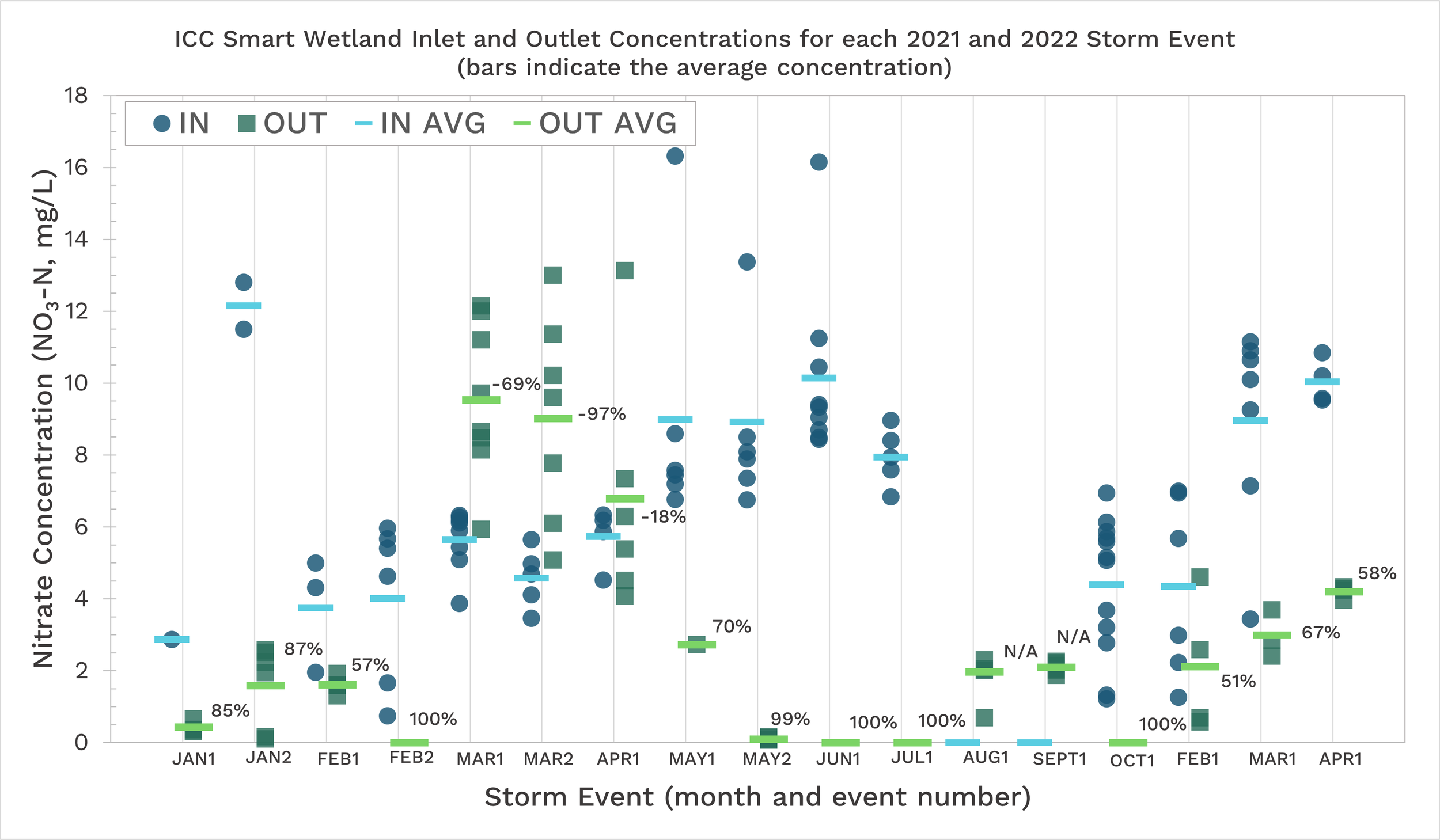
Unlike the Bureau County wetlands, the ICC samples are taken based on a set volume passing the collection point versus daily, so these samples essentially capture rainfall events when the “first flush” of nutrient flow through the tile drainage. The data show that the nitrate levels leaving the wetland are much lower than the inlet concentrations.

In 2021, we saw zero nitrate leaving the system in some cases, as evaporation was greater than the flow into the wetland (see Figure 2). In spring 2021, the wetland was exporting nitrate and total phosphorus and dissolved phosphorus. This may be due to the soils and sediments getting disturbed and mixed by the heavy rainfall or the presence of waterfowl nesting and feeding in the wetland.

Our water quality monitoring at all three wetlands demonstrates that the sites effectively remove significant nutrients from tile drainage water over a large part of the year. Our findings have also pointed to ways that we can further enhance the practice to make Smart Wetlands work even harder!

Figure 2. The inlet (blue dots) and outlet (green squares) concentrations for the Illinois Central College Smart Wetland for each storm event. The blue and green bars represent the average concentration for the inlet and outlet, respectively, for each storm event. The % number represents the removal efficiency based on the average concentrations. N/A means that no inlet samples were taken due to autosampler error.

Jill Kostel leads the project team as TWI’s Senior Environmental Engineer and primary designer of Smart Wetlands. She also works to develop new partnerships to help spread constructed wetlands widely in Illinois.

The Mississippi River Network provided support for developing this blog. Consider becoming a River Citizen to help “clean up and protect our country's greatest River.”