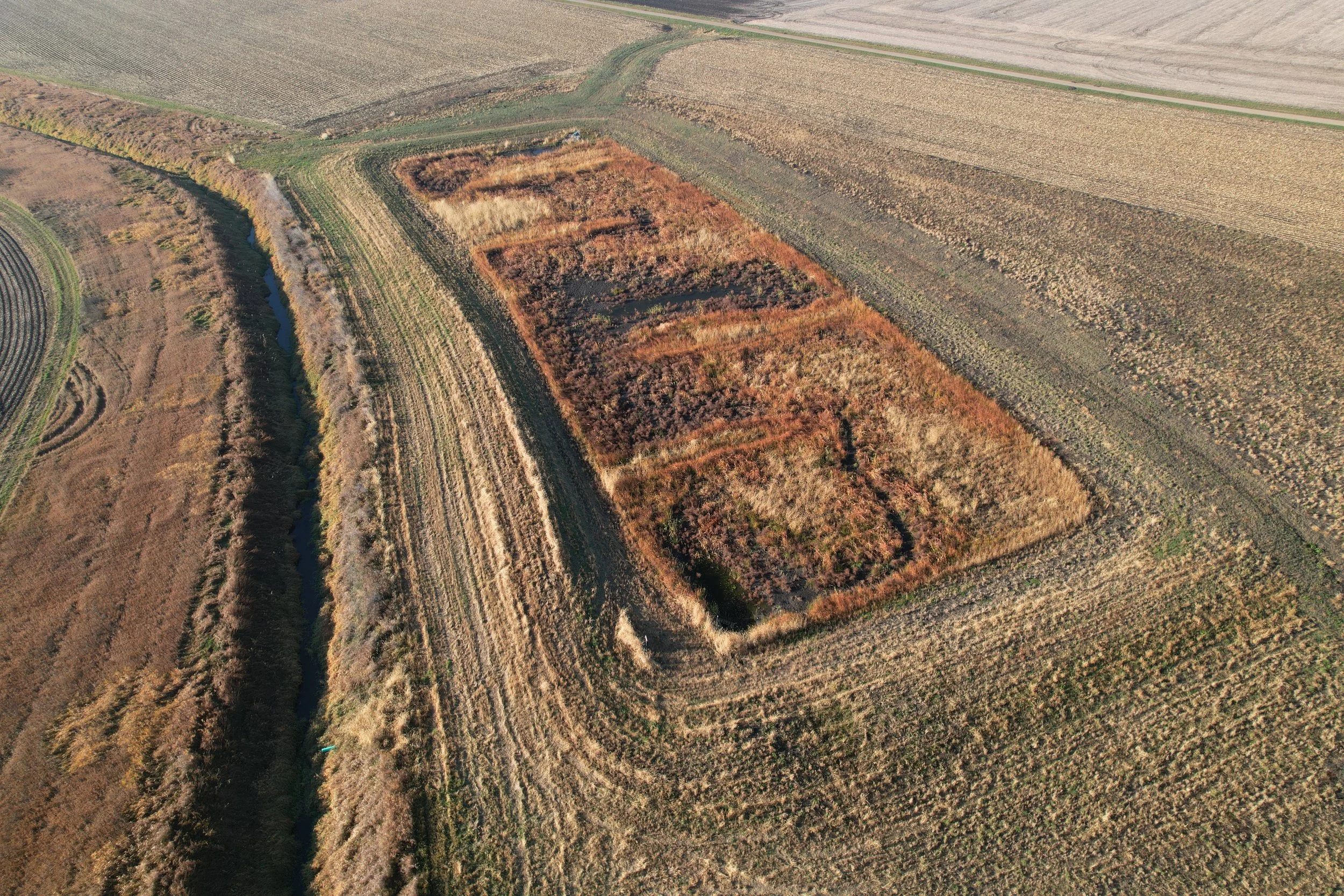
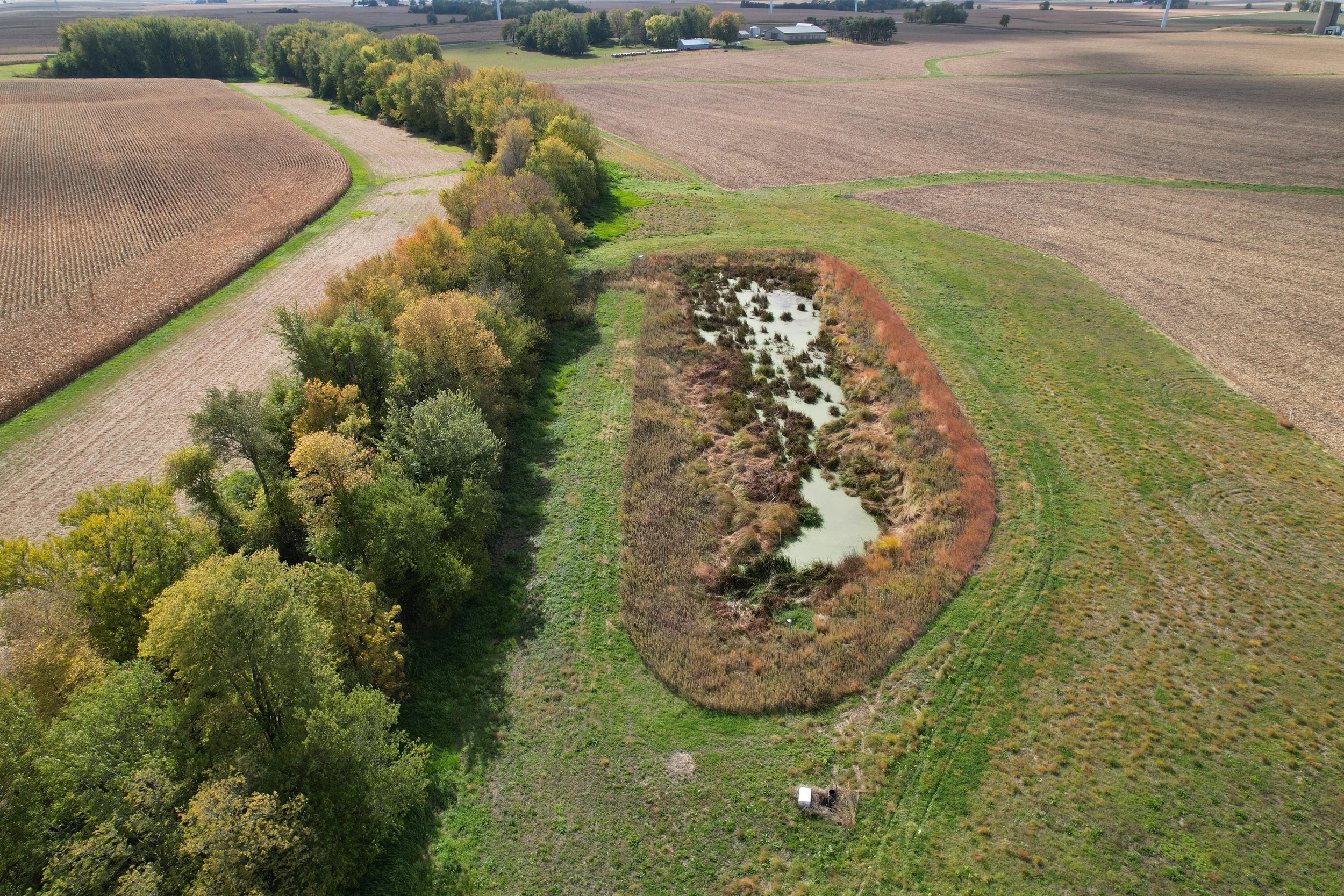
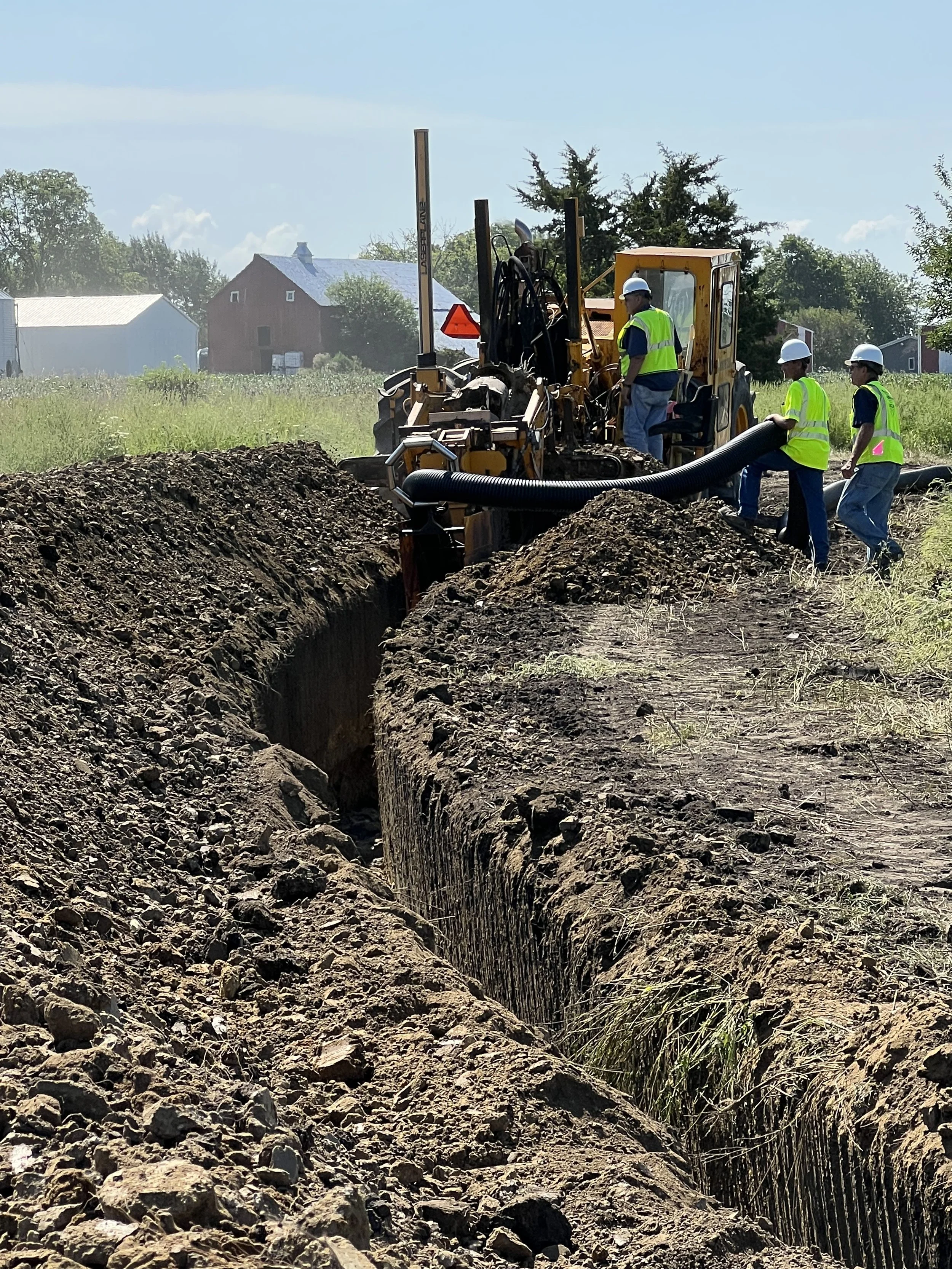
With TWI’s Smart Wetlands designs, we are simply providing the opportunity for wetlands to do what they all do naturally. By intercepting the tile water and allowing it to slow down and gently flow through a shallow wetland full of native plants, the naturally occurring processes adsorb/absorb, transform, sequester, uptake, trap, and remove nitrogen and phosphorus and other chemicals. All these activities occur throughout the different wetland components: the water; the living biota (plants, algae, fungi, and bacteria); the dead biota or litter (decomposing residual plant matter); and the underlying soils (sediment). We design the Smart Wetlands in a manner to provide the best conditions to enhance some of these processes.
You would think that all the abundant green native vegetation in a wetland is responsible for removing most of the excess nitrogen and phosphorous entering the wetland, since plants use these nutrients to grow. Wetland plants do uptake inorganic nitrogen and phosphorus forms through their roots and/or foliage during the spring and summer and convert them into organic compounds for growth. However, this only stores the nutrients temporarily. Most of these assimilated nutrients are released back into the water and soils when plants grow old and decompose during the fall and winter.
But together with bacteria, wetland plants do play a key role in the primary removal processes for nitrogen and phosphorus. Nitrogen removal involves bacteria (or microbes) that conduct numerous chemical reactions that we can’t see. These ubiquitous bacteria are found on the solid surfaces within the wetland, such as soil, litter, and submerged plant stems and leaves. The main transformation processes are ammonification (organic nitrogen converted to ammonia), nitrification (ammonia converted to nitrate or nitrite), and denitrification, where nitrate (NO3) is converted into harmless nitrogen gas (N2), which composes 85% of our atmosphere.
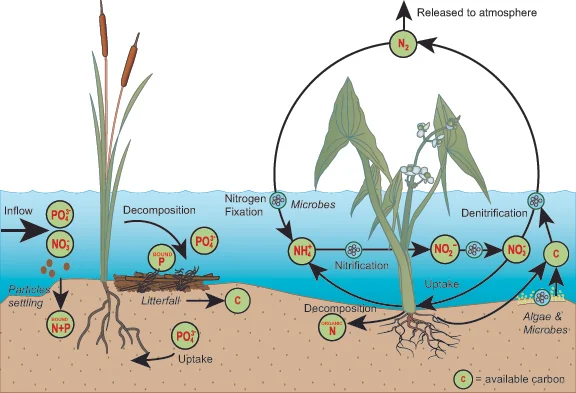
How is nitrogen removed?
For Smart Wetlands, we rely on denitrification to reduce the high nitrate levels in agricultural tile drainage runoff. Denitrification requires three items to be present at the same time – denitrifying bacteria (present in all soils), nitrate (in the tile water), and available carbon (right side of the above graphic). Carbon serves as the bacteria’s food source for growth and energy, and wetland plants are a vital source of this carbon. Denitrification occurs when there is little to no oxygen available so the bacteria switch to “breathing” in nitrate instead of oxygen. These low oxygen zones are found in the top few centimeters of the sediment and within the biofilms growing on the plant stems and leaves. Shallow wetlands create these low-oxygen zones and allow for the nitrate to reach these zones. Since denitrification is performed by bacteria, the process is temperature-dependent. The rate of microbial activity increases in the summer months due to higher air temperatures and increased sunlight warming up the cool tile water.
How is phosphorus removed?
Unlike nitrogen, phosphorus is removed primarily through physical and chemical processes. Phosphorus typically enters wetlands attached to small soil particles (particulate form) and as phosphate (dissolved form of phosphorus). When water enters the wetland, it spreads out and slows down due to the vegetation, which acts like a filter allowing any particles or suspended material to settle to the bottom of the wetland. Particulate phosphorus is deposited in wetlands in the form of sediment. Phosphate (PO4) accumulates quickly in sediments by chemically binding to aluminum, calcium, and iron through adsorption and precipitation processes. Wetland soils have a limited amount of phosphorus they can hold. To continuously remove phosphorus, new soils need to be ‘built” within the wetland from remnant plant stems, leaves, root debris, and undecomposable parts of dead algae, bacteria, fungi, and invertebrates. The growth, or accretion, of new material in the wetland is the only sustainable removal and storage process for phosphorus.
Jill Kostel leads the project team as TWI’s Senior Environmental Engineer and primary designer of Smart Wetlands. She also works to develop new partnerships to help spread constructed wetlands widely in Illinois.
The Mississippi River Network provided support for developing this blog. Consider becoming a River Citizen to help “clean up and protect our country's greatest River.”