Lake Springfield Gets another Smart Wetland
Another constructed wetland is being built near Chatham, IL to reduce the flow of pollutants from agricultural drainage water into Lake Springfield. About 74 percent of Lake Springfield’s 265-square-mile drainage area is agricultural, and 94% of all cropland soils are thought to be tile-drained. Surface and subsurface drainage runoff from the watershed can contain pollutants such as excess nutrients, pesticides, and sediment, resulting in elevated levels of nitrate, phosphorus, total suspended solids, and aquatic algae in the Lake.
High levels of nutrients and sediment entering the lake can make City Water Light and Power’s (CWLP) treatment process more complex and costly by increasing algae growth, which can cause taste and odor issues, and adding more particles that must be removed, requiring additional chemicals and more frequent filtration.
Nitrate levels are closely monitored and controlled to keep drinking water well below the EPA’s safety limit of 10 mg/L. When the wetlands are fully operational, they will naturally reduce nutrient loads before the water reaches the lake. Tile-treatment wetlands are just one of several tile-treatment and nutrient management practices being promoted in the watershed by CWLP, NRCS, and the Sangamon County Soil & Water Conservation District.
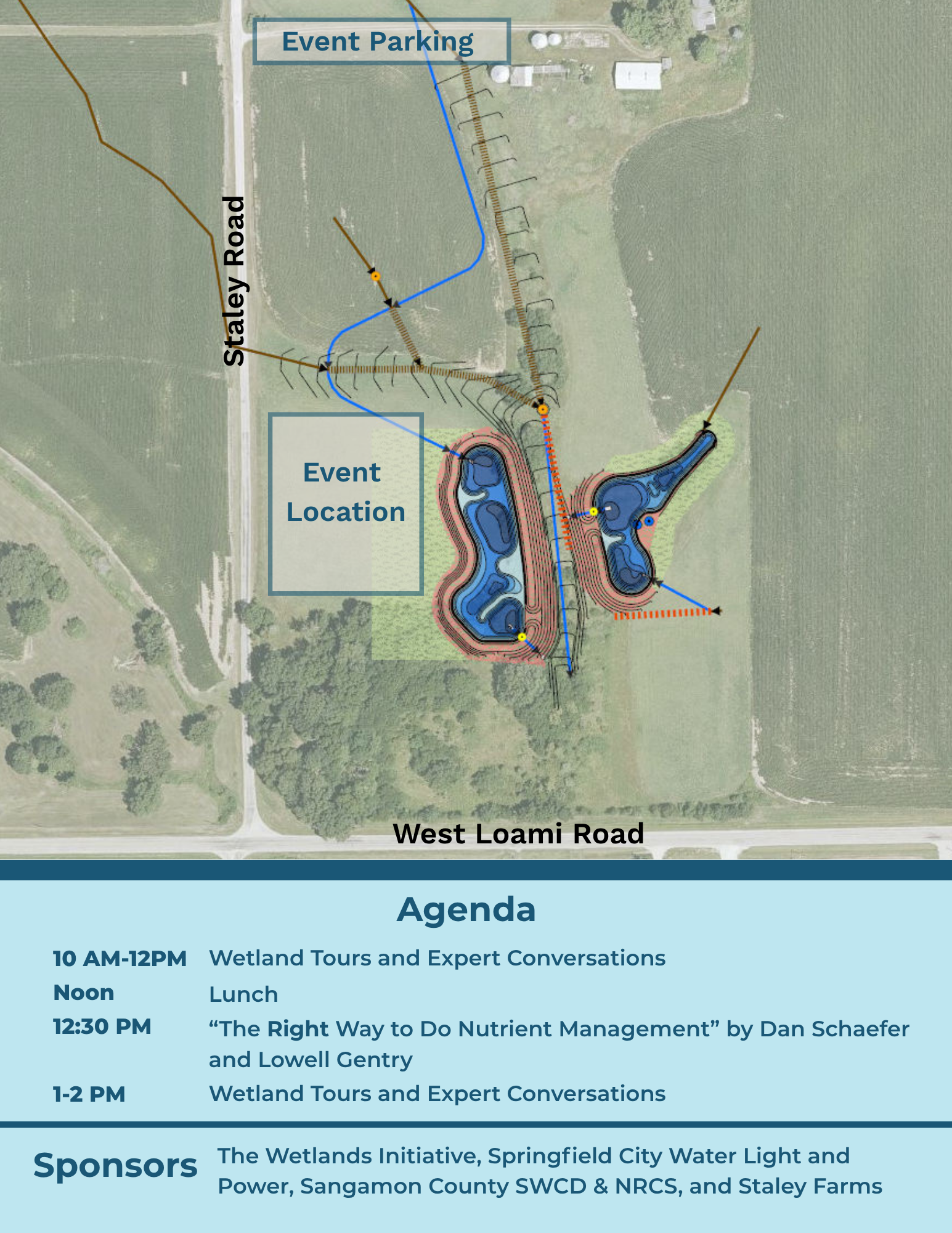
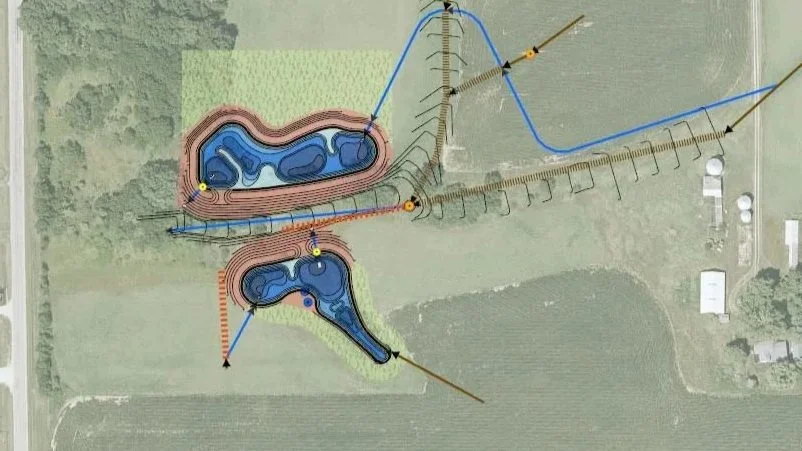
The image below shows how drainage water will be channeled from nearby farm fields into the new wetland. Once the wetland captures and breaks down pollutants, the water will flow into the existing pond. The pond drains onto city-owned land and into Lake Springfield.
Smart Wetlands Near LOamI, IL Are Complete!
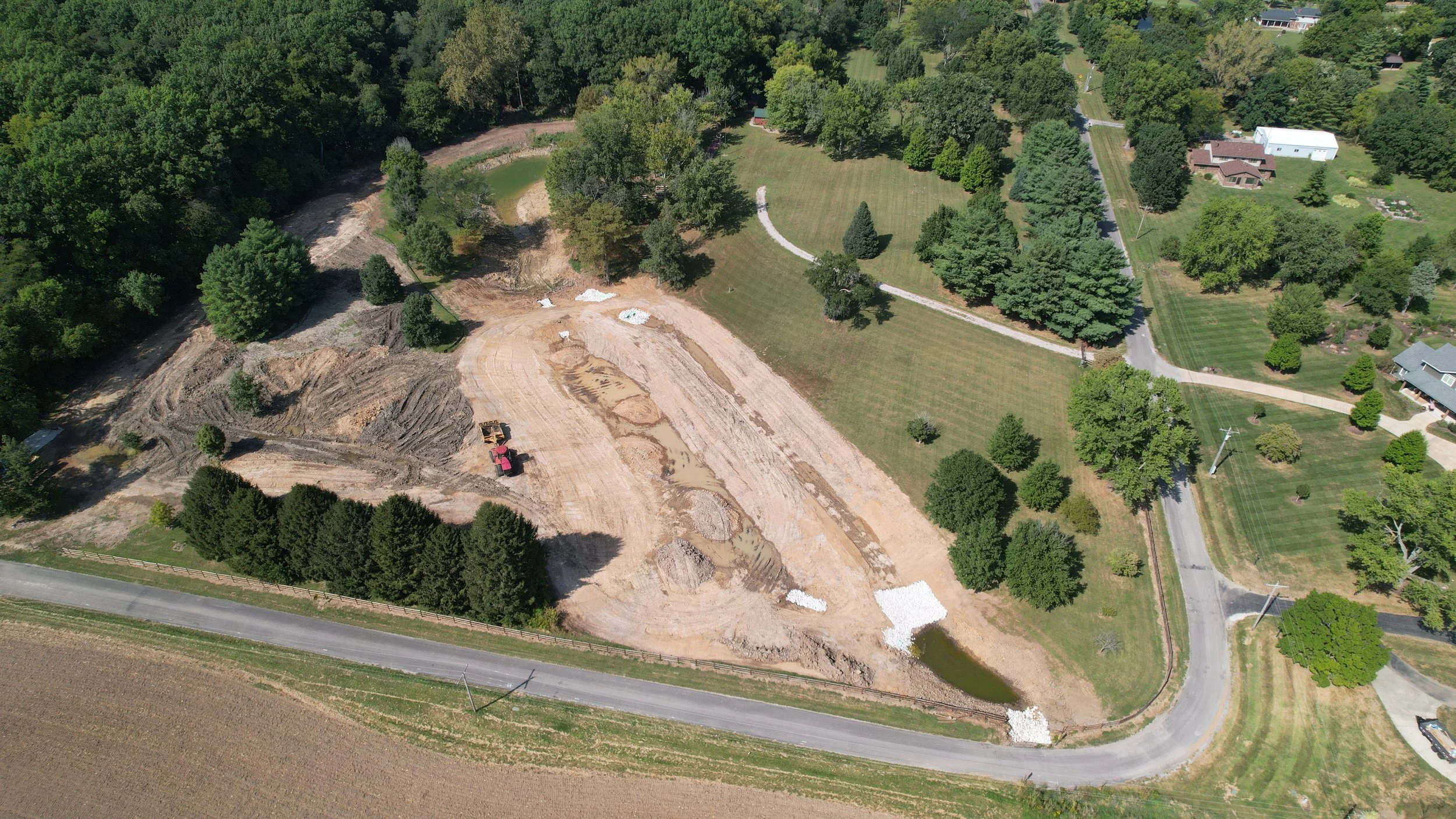
Even though large amount of rain in June and early July in the Springfield, IL area, the seventh Smart Wetland is now fully built. Construction started June 1.
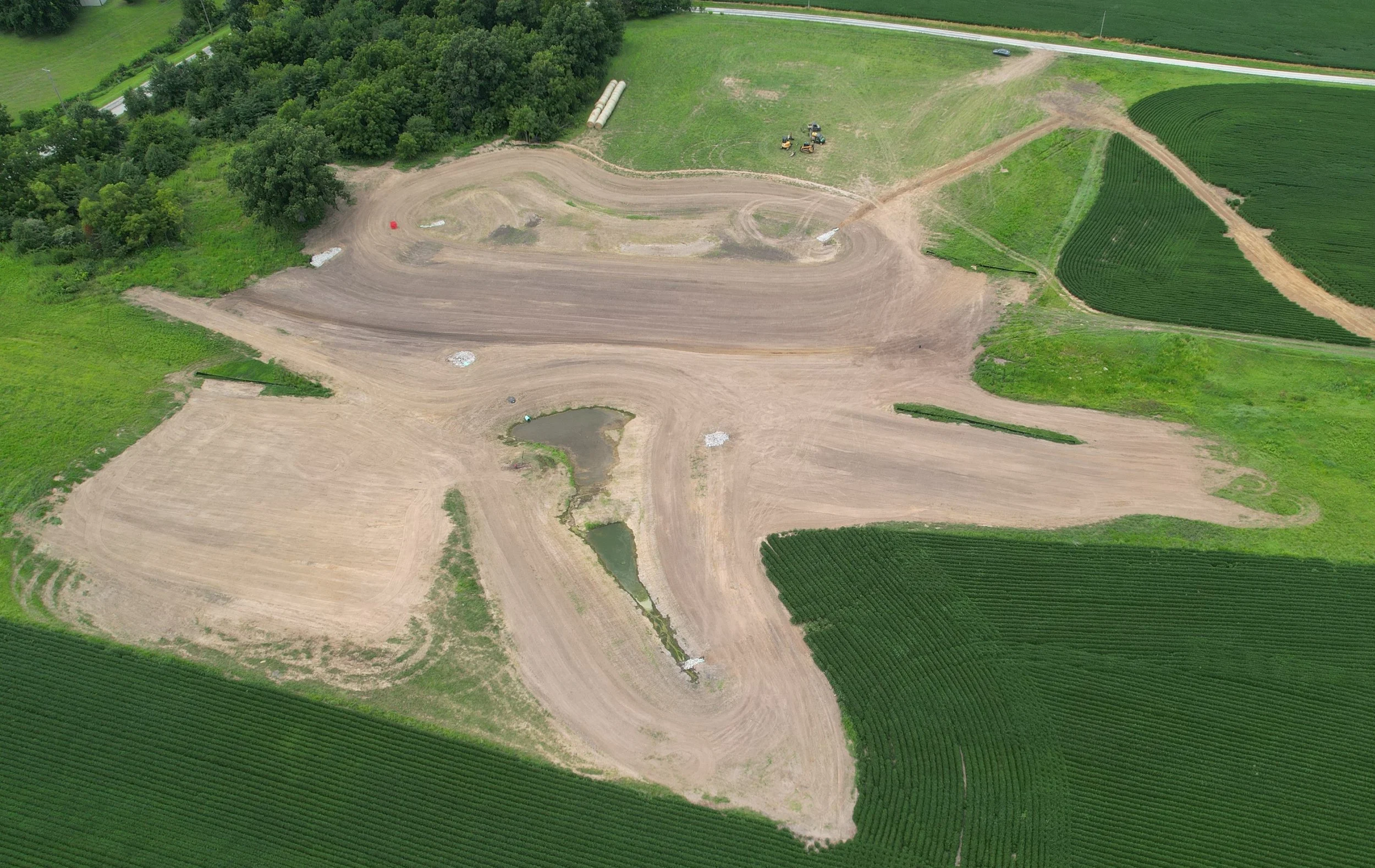
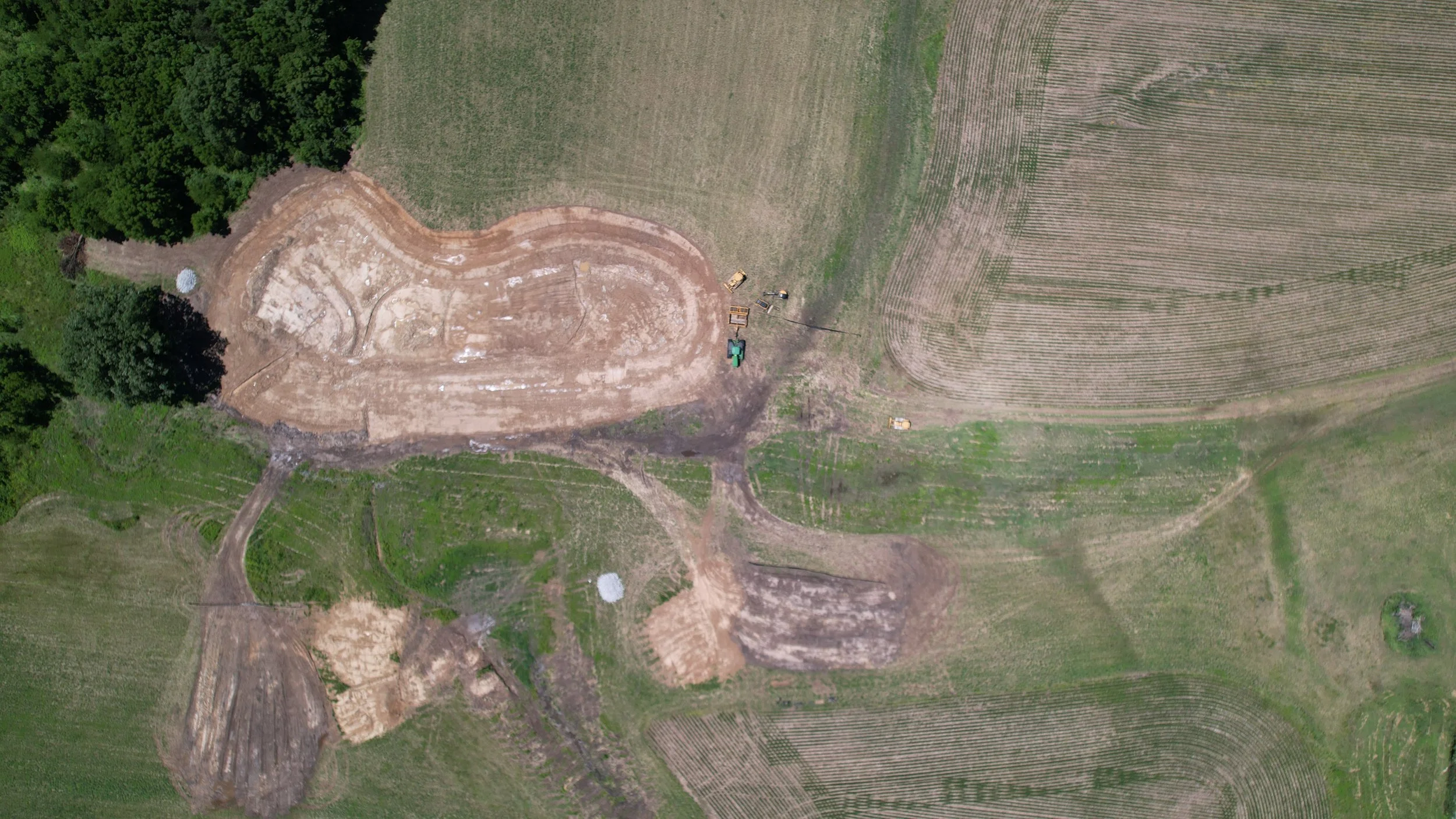
The photo below shows the site part way through construction on June 12, 2026. The image below is one of several engineering drawings created by Brendon De Rosario, a water resources engineer on the Smart Wetlands team, used by construction crews to b accurately construct the twin wetlands.
You can read more about how these wetlands are being used by Springfield City Water, Light and Power to remove excess nitrogen and pesticides from that the water flowing into Springfield-area homes.