
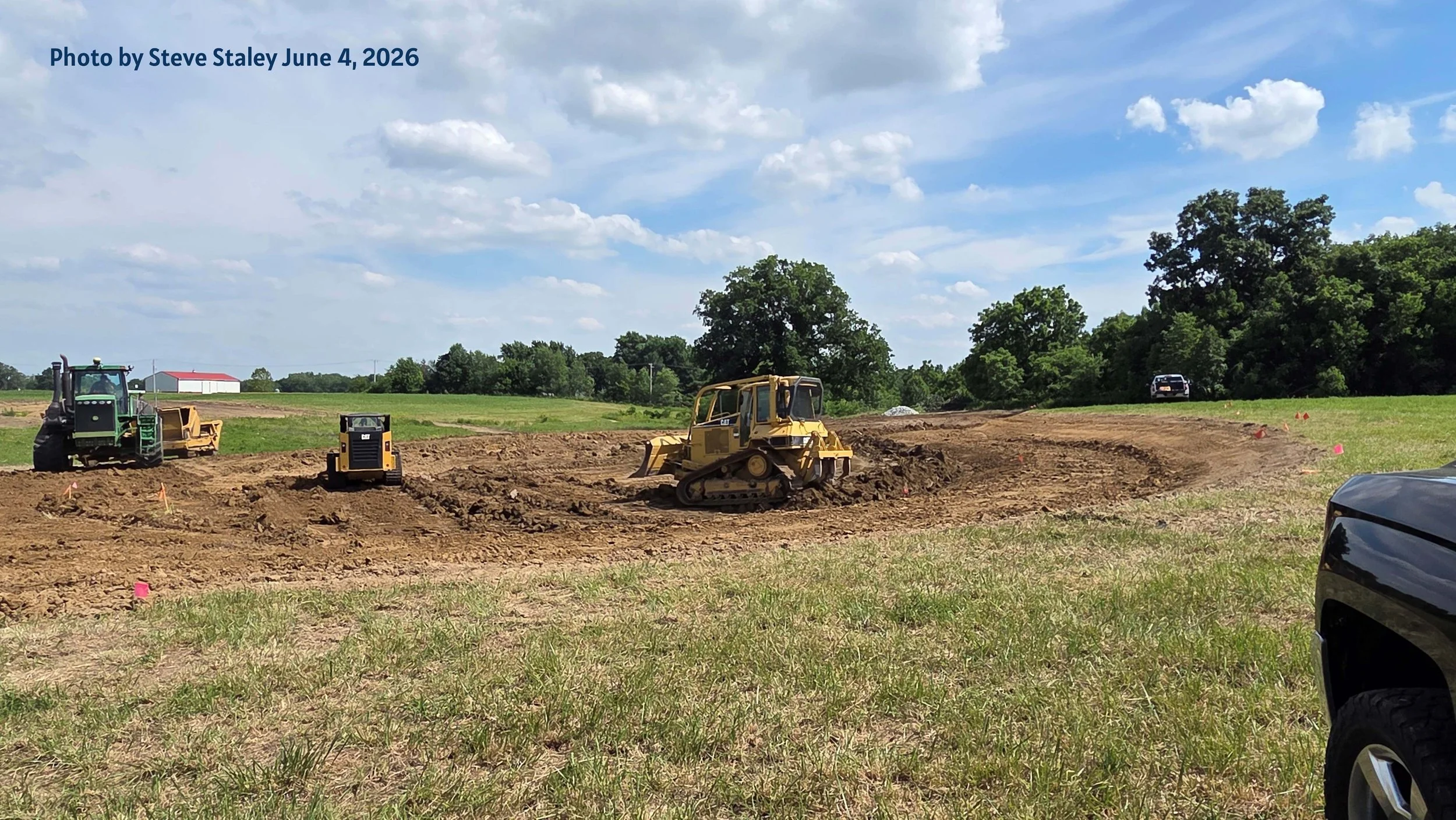
LOAMI, IL (June 5, 2026)—Springfield City Water, Light, and Power (CWLP) uses powerful equipment and processes to provide safe drinking water to approximately 165,000 Springfield residents’ taps. One of the newest processes CWLP is using involves nature, specifically tile-treatment wetlands on farms to remove excess nutrients from agricultural tile drainage water.
On June 24, 2026, you can see these new nitrate removal systems that CWLP is supporting at a working Loami farm. The Wetlands Initiative (TWI), along with Staley Farms, welcomes local farmers, conservation/agriculture professionals, and the public to see the two newly constructed wetlands up close before they become fully operational next spring. These wetlands were built as part of CWLP’s Lake Springfield Source Water Protection Regional Conservation Partnership Program (RCPP) through the USDA Natural Resources Conservation Service.
The event will run from 10 am to 2 pm, with self-guided tours of the wetlands area and opportunities to learn about how these wetlands are constructed, how natural biological and chemical processes remove nitrate and pesticides, and the effectiveness and efficiency of pollutant removal. Conservation professionals will be available to discuss a range of in-field and edge-of-field best practices to reduce nutrient and sediment runoff. The event location is 8290 Staley Road, Loami, IL.
A free lunch will be served at noon, followed by a presentation on “The Right Way to Do Nutrient Management” by Dan Schaefer of the Illinois Fertilizer and Chemical Association and Lowell Gentry, from the University of Illinois, Champaign-Urbana. In addition, farmers, farmland owners, and agribusiness professionals will have the opportunity to talk with experts about funding and technical services available to help them use wetlands and other tile-treatment practices as part of their agricultural tile drainage systems.
These constructed wetlands, and another to be installed later this year near Chatham, IL, are important because about 74 percent of Lake Springfield’s 265-square-mile drainage area is in agriculture, with 94% of all the cropland soils thought to be tile-drained. Surface and subsurface drainage water runoff from the watershed can contain pollutants, such as excess nutrients, pesticides, and sediment, resulting in elevated levels of nitrate, phosphorus, total suspended solids, and aquatic algae in Lake Springfield.
High levels of nutrients and sediment entering the lake can make CWLP’s treatment process more complex and costly by increasing algae growth, which can cause taste and odor issues, and adding more particles that must be removed, requiring additional chemicals and more frequent filtration.
Nitrate levels are closely monitored and controlled to keep drinking water well below the EPA’s safety limit of 10 mg/L. When the wetlands are fully operational, they will naturally reduce nutrient loads before the water reaches the lake. Tile-treatment wetlands are just one of several tile-treatment and nutrient management practices being promoted in the watershed by CWLP, NRCS, and the Sangamon County Soil & Water Conservation District.
Visit www.smartwetlands.farm/sangamoncounty1 to learn more about this event.
About Smart Wetlands
Through the Smart Wetlands program, the Wetlands Initiative conducts collaborative outreach and provides free technical assistance for landowners to install small tile-treatment wetlands on their properties, which naturally capture and remove excess nutrients from drainage water before it leaves the farm. These constructed wetlands provide side benefits of wildlife habitat and recreational opportunities, and they are a long-lasting way of addressing the runoff issue from farm fertilizers without impacting productive farmland. Visit www.smartwetlands.farm for more information.
About the Wetlands Initiative
The Wetlands Initiative (TWI) designs, restores, and creates wetlands. We innovate, collaborate, and employ sound science in pursuit of our vision of a world with plentiful healthy wetlands improving water quality, climate resilience, biodiversity, and human well-being. Visit www.wetlands-initiative.org for more information.