Lake Springfield Gets another Smart Wetland
Another constructed wetland is being built near Chatham, IL, to reduce the flow of pollutants from agricultural drainage water into Lake Springfield. About 74 percent of Lake Springfield’s 265-square-mile drainage area is agricultural, and 94% of all cropland soils are thought to be tile-drained. Surface and subsurface drainage runoff from the watershed can contain pollutants such as excess nutrients, pesticides, and sediment, resulting in elevated levels of nitrate, phosphorus, total suspended solids, and aquatic algae in the Lake.
High levels of nutrients and sediment entering the lake can make City Water Light and Power’s (CWLP) treatment process more complex and costly by increasing algae growth, which can cause taste and odor issues, and adding more particles that must be removed, requiring additional chemicals and more frequent filtration.
Nitrate levels are closely monitored and controlled to keep drinking water well below the EPA’s safety limit of 10 mg/L. When the wetlands are fully operational, they will naturally reduce nutrient loads before the water reaches the lake. Tile-treatment wetlands are just one of several tile-treatment and nutrient management practices being promoted in the watershed by CWLP, NRCS, and the Sangamon County Soil & Water Conservation District.
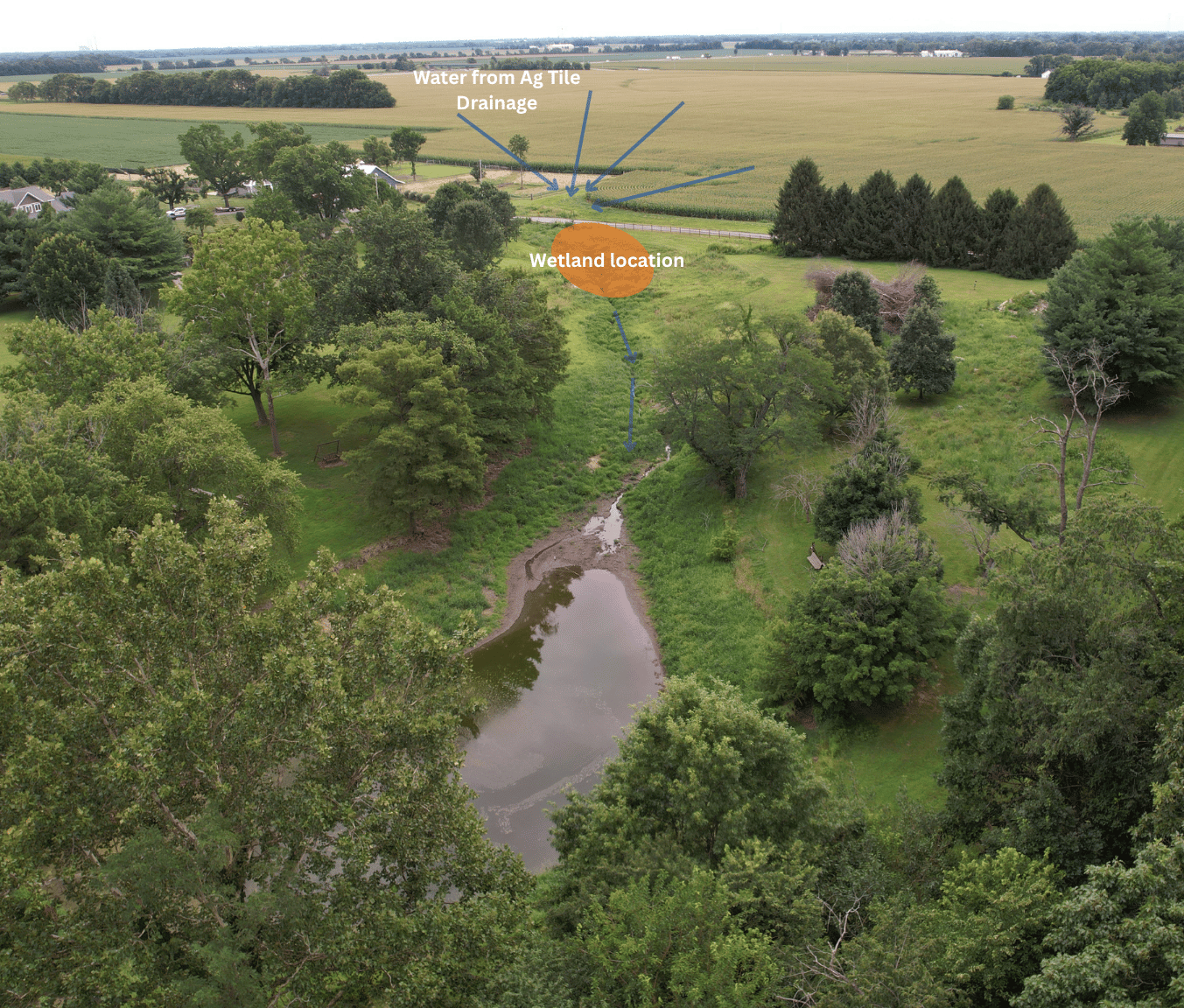
The image below shows how drainage water will be channeled from nearby farm fields into the new wetland. Once the wetland captures and breaks down pollutants, the water will flow into the existing pond. The pond drains onto city-owned land and into Lake Springfield.
Smart Wetlands Near LOamI, IL Are Complete!
Even though large amount of rain in June and early July in the Springfield, IL area, the seventh Smart Wetland complex is now fully built. Construction started June 1. The next stage is establishing vegetation so that the chemical and biological processes will have the necessary environment to break down pollutants in the water that will eventually flow through the wetlands. Watch this space for images of the plants and first water flowing into the wetland.
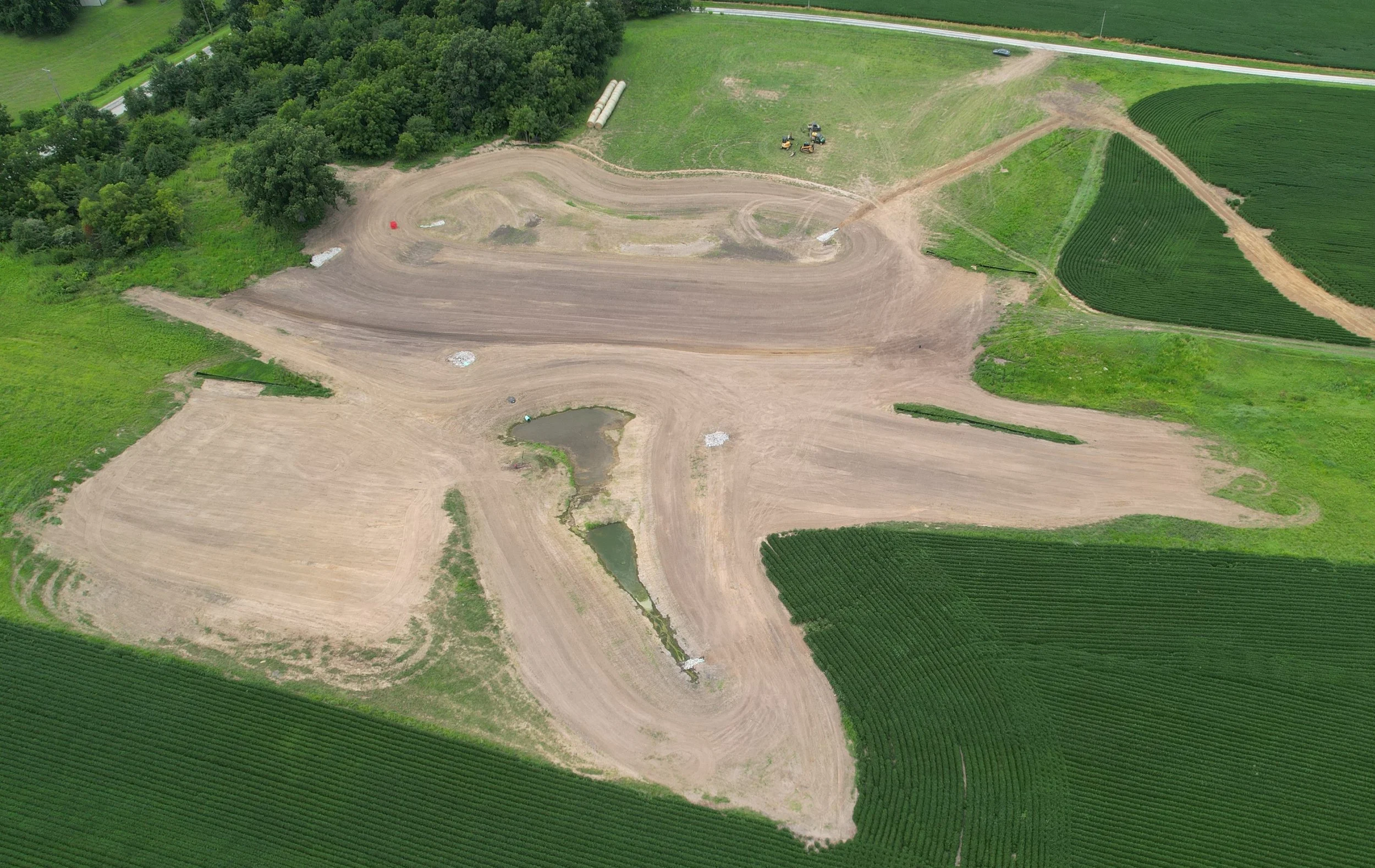
New Smart wetlands being built near Springfield, IL
In June 2026, two new Smart Wetlands are being constructed. The public will be able to check out this water quality improvement practice at a field day on Wednesday, June 24, 2026 from 10AM to 2PM.
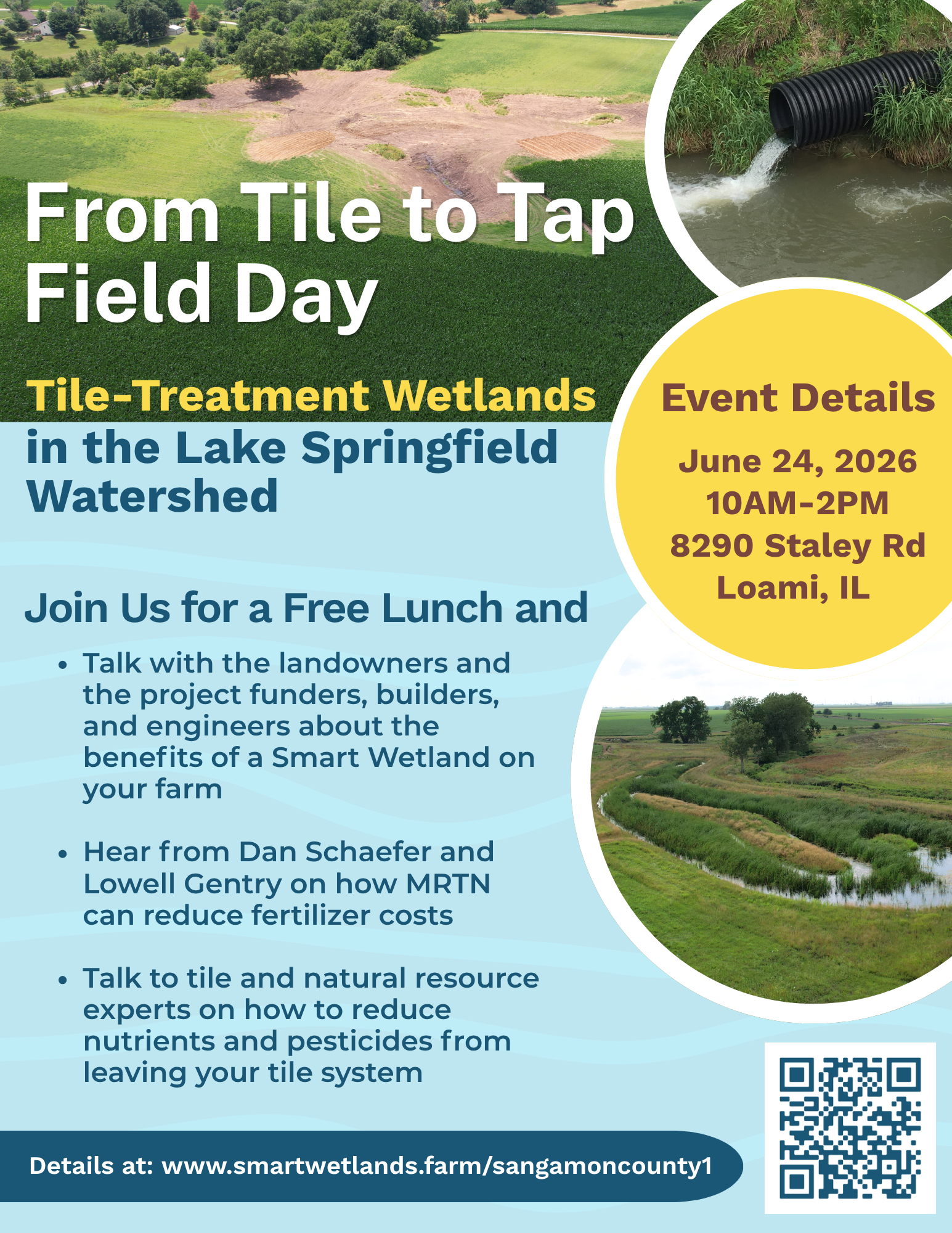
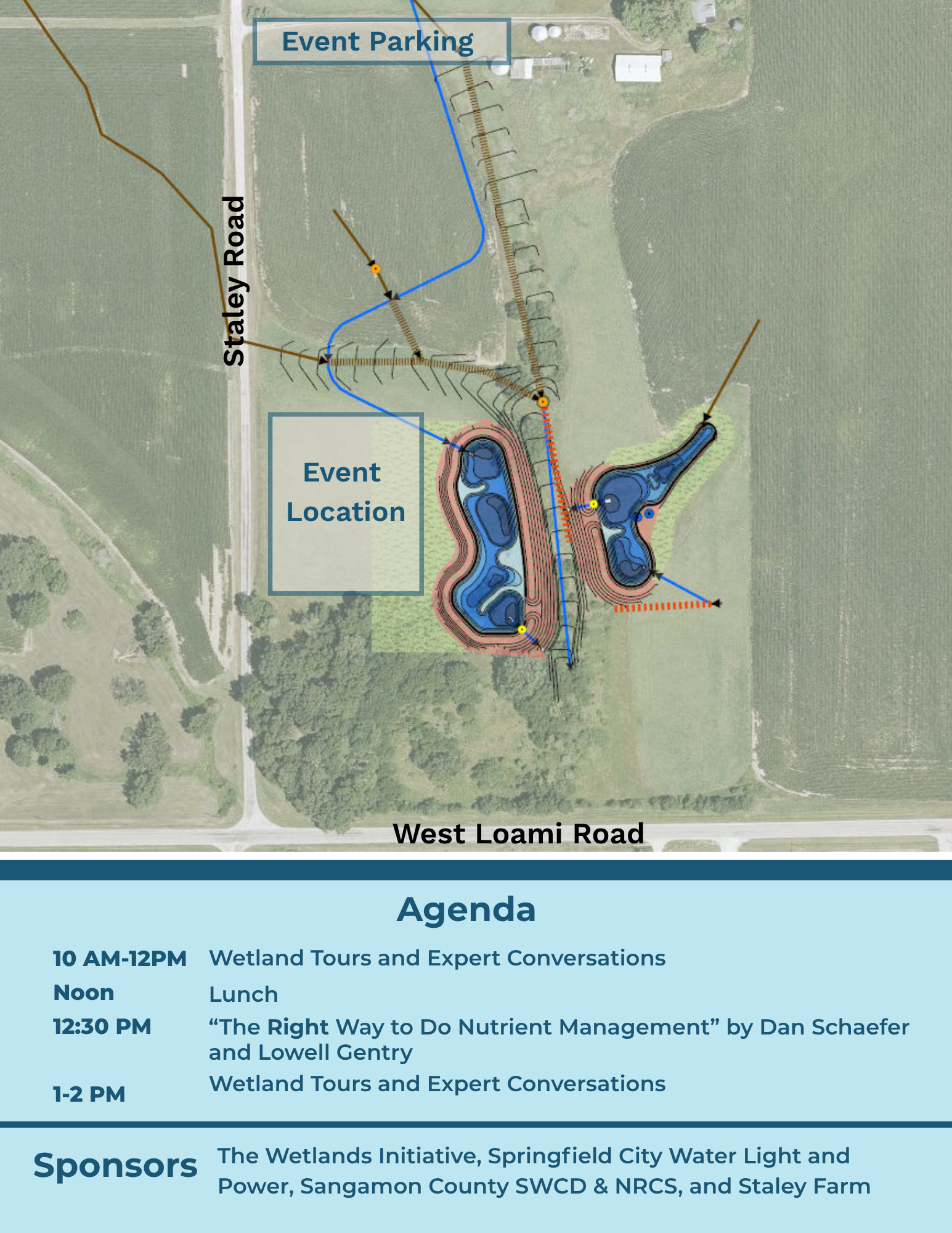
Illinois solution to excess farm nutrients in cropland water bodies
When it comes to keeping pollutants out of Illinois rivers and creeks, farmers and their advisors rarely align with water scientists and water quality improvement advocates on solutions to reduce excess nutrients flowing from cropland. However, it turns out that Smart Wetlands are one solution they can all support.
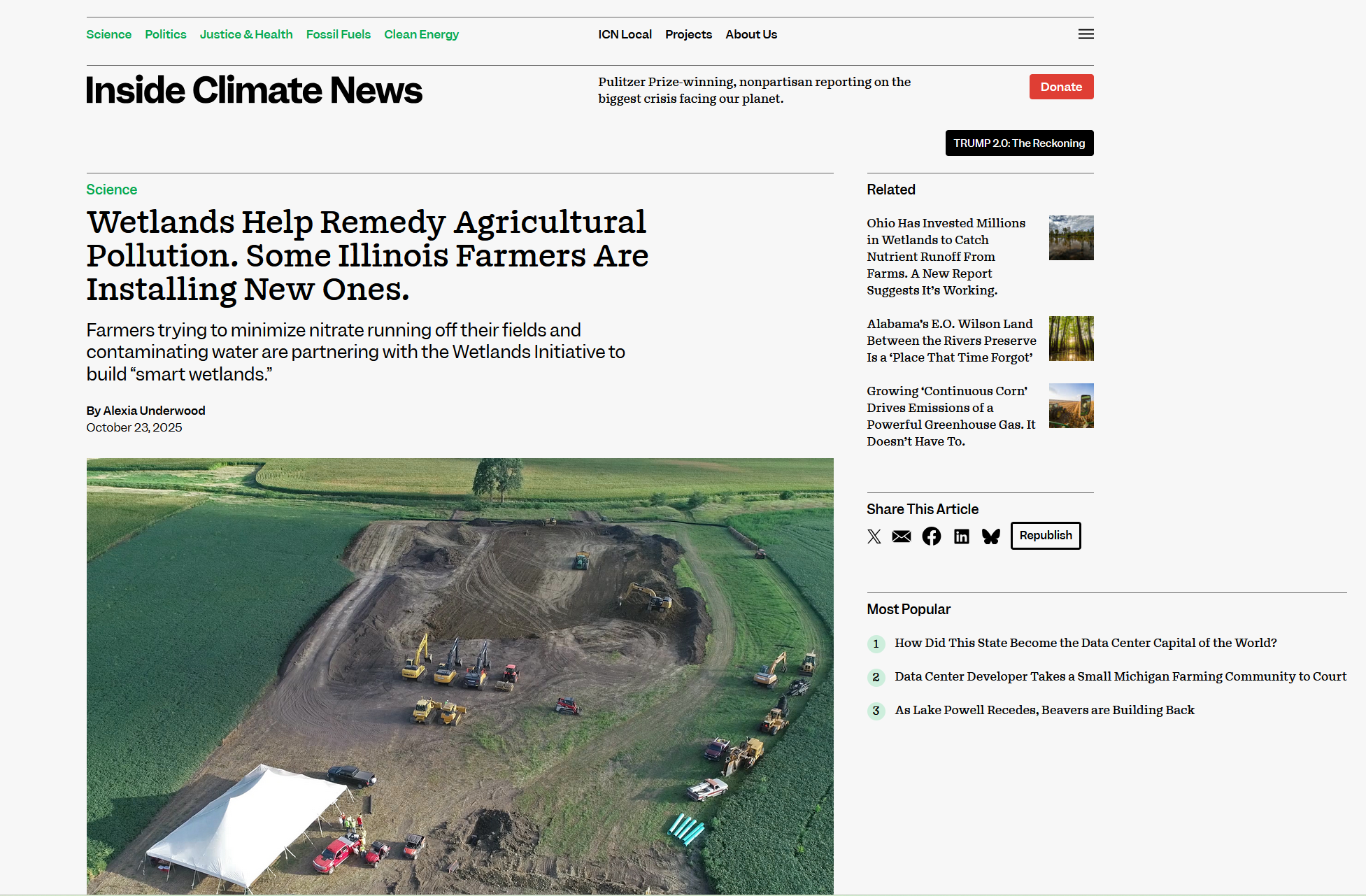
Smart Wetlands go Graphic
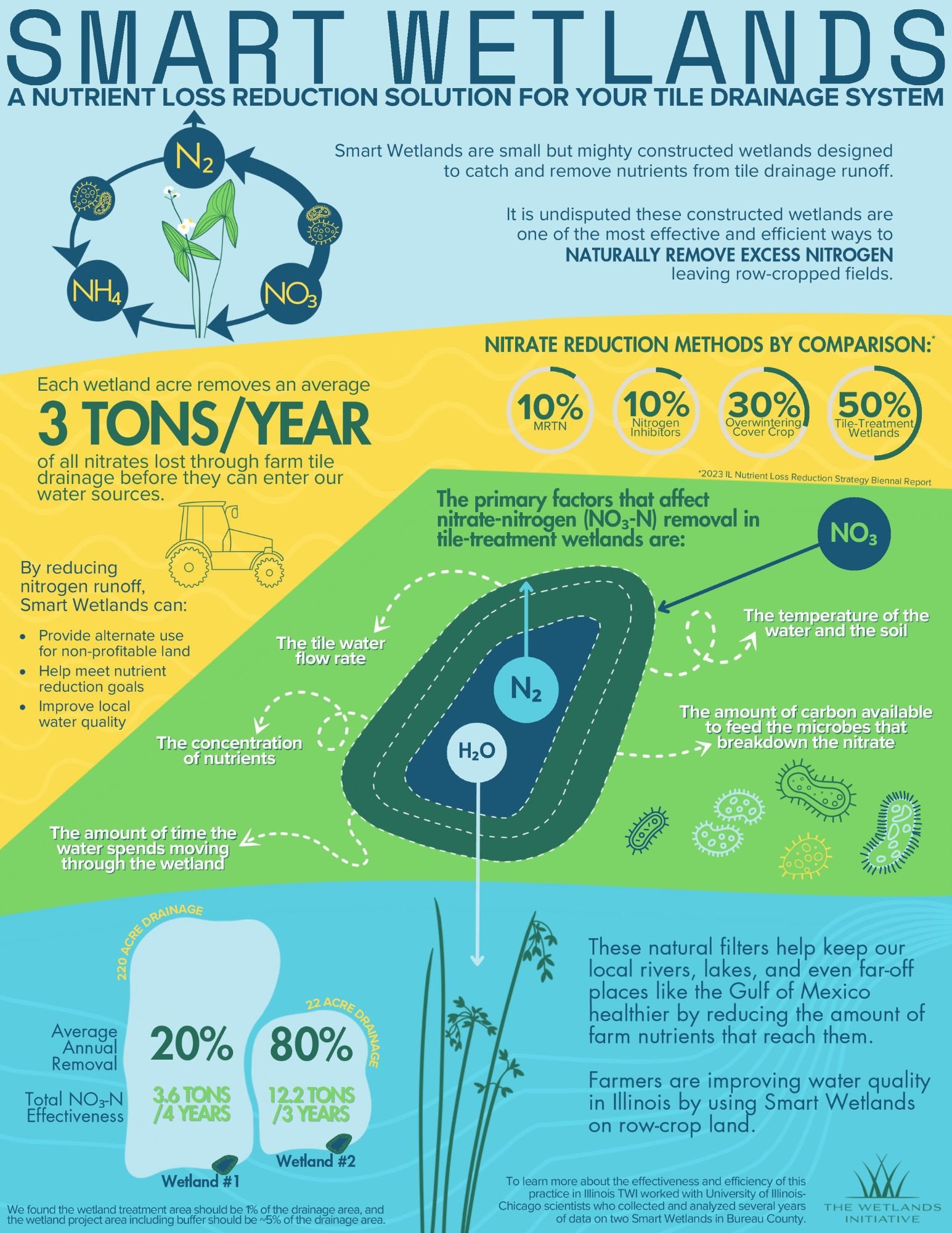
While Smart Wetlands are designed for one primary purpose: to naturally remove nitrate from farm tile drainage water, the data story they tell can be complex. That is why we created the infographic below to help tell the story of how they work and the quantity of nitrate they can remove.
Plant Power: Ecologists map vegetative makeup of Smart Wetlands to Guide Ecosystem Management
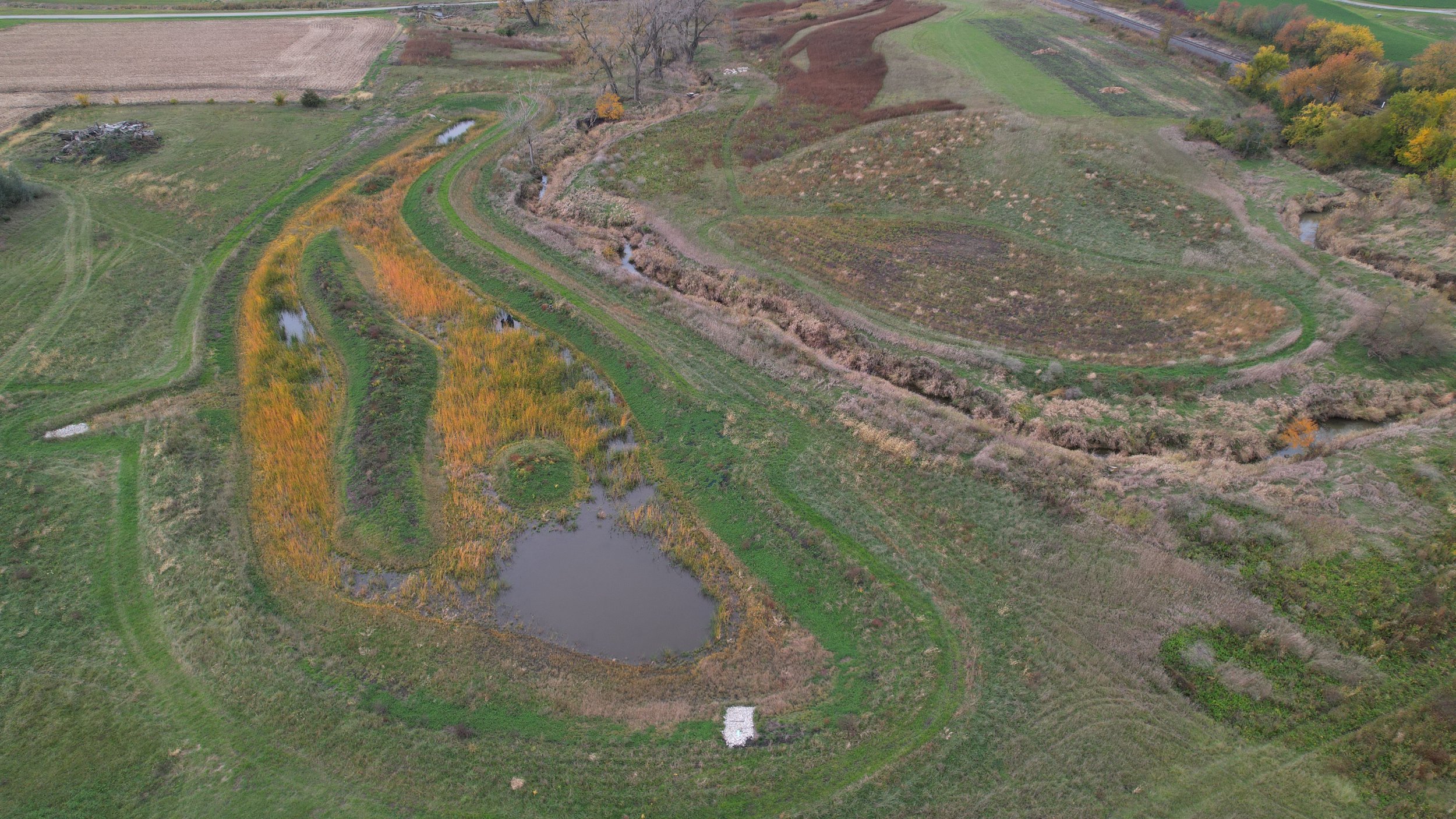
In an exciting development for TWI’s Smart Wetlands program, staff ecologists have taken a step toward better understanding the evolving vegetative makeup of our farm-based Smart Wetlands sites, designed to improve water quality. Beginning in 2023, plant surveys were conducted at the sites for the first time. The surveys add to an existing body of water, soil, and nutrient data already collected for the purpose of better understanding, monitoring, and improving the Smart Wetlands going forward. (Continue reading)

Native swamp milkweed (foreground) and hybrid cattail were identified in the recent surveys.
Smart Wetlands Are a Reason to Be CHeerful
The Wetlands Initiative is pleased that our Smart Wetlands are considered A Reason to be Cheerful. The story along with photos and video from wetlands in Livingston and Marshall County, IL can be found at https://reasonstobecheerful.world/farmland-constructed-wetlands-healthier-watersheds/
Reasons to be Cheerful is part of musician David Byrne’s effort to re-imagine “the world through projects that inspire and educate.”

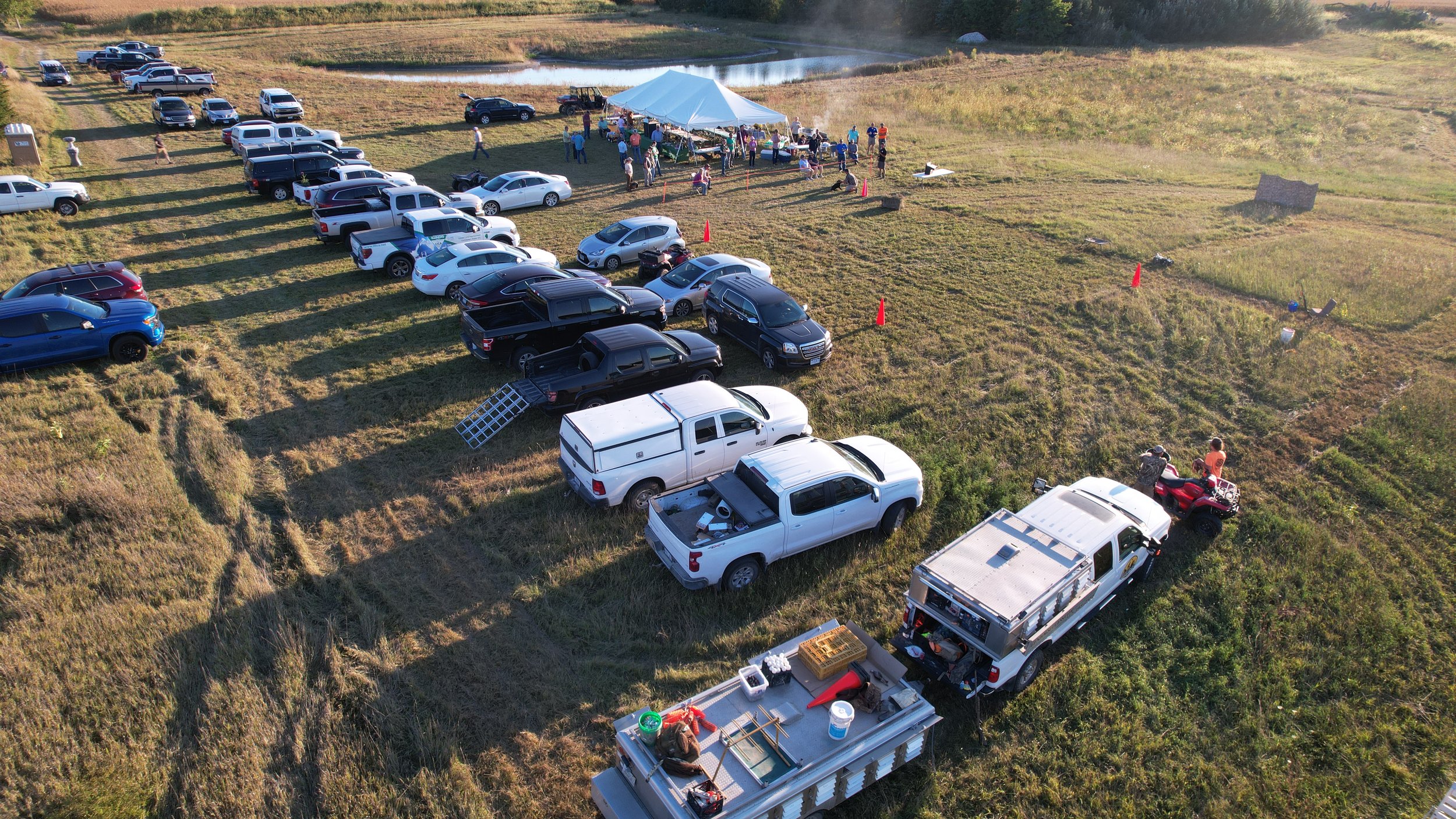
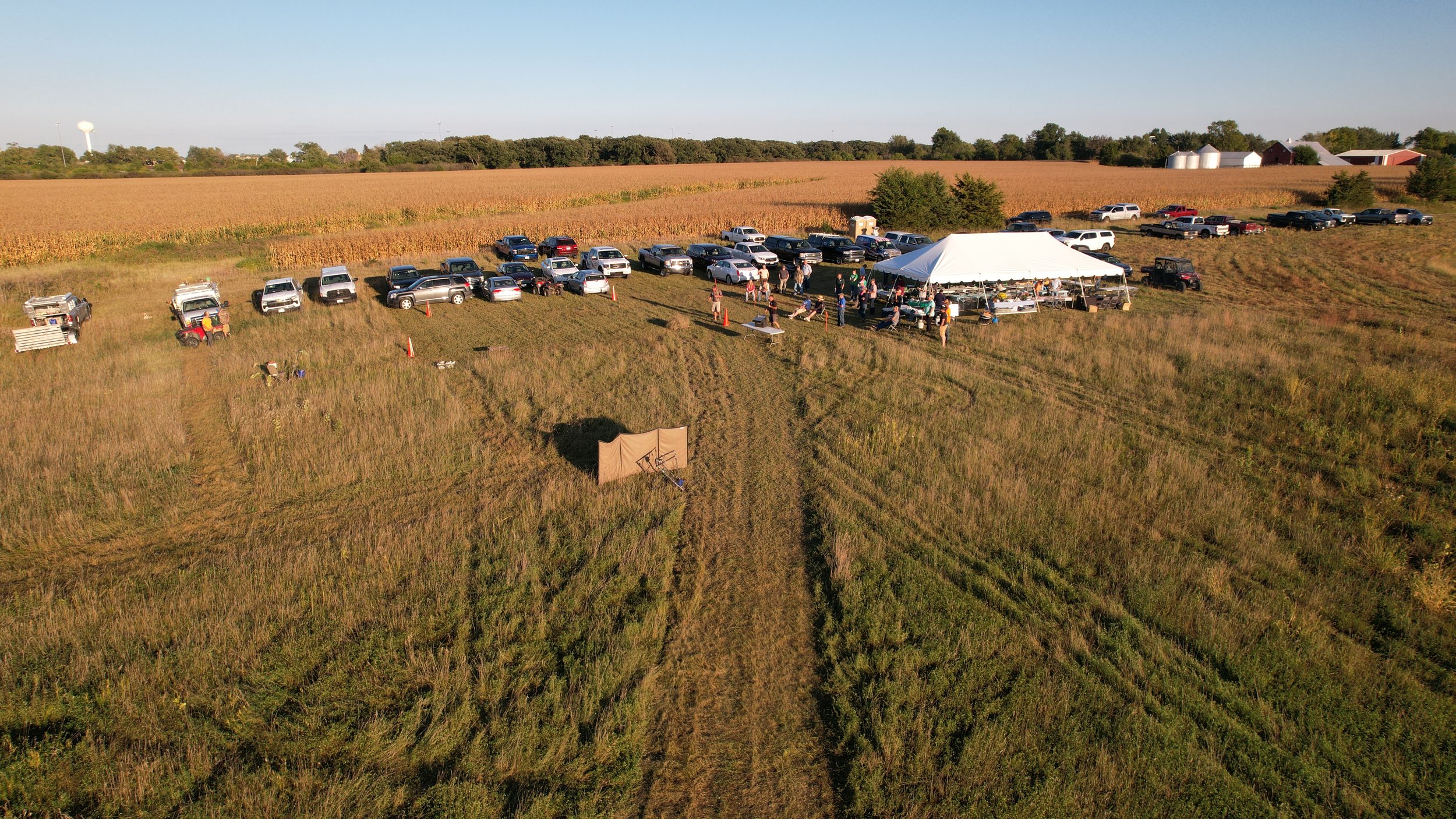
A festive Fall Field Day at Feather Prairie Farms
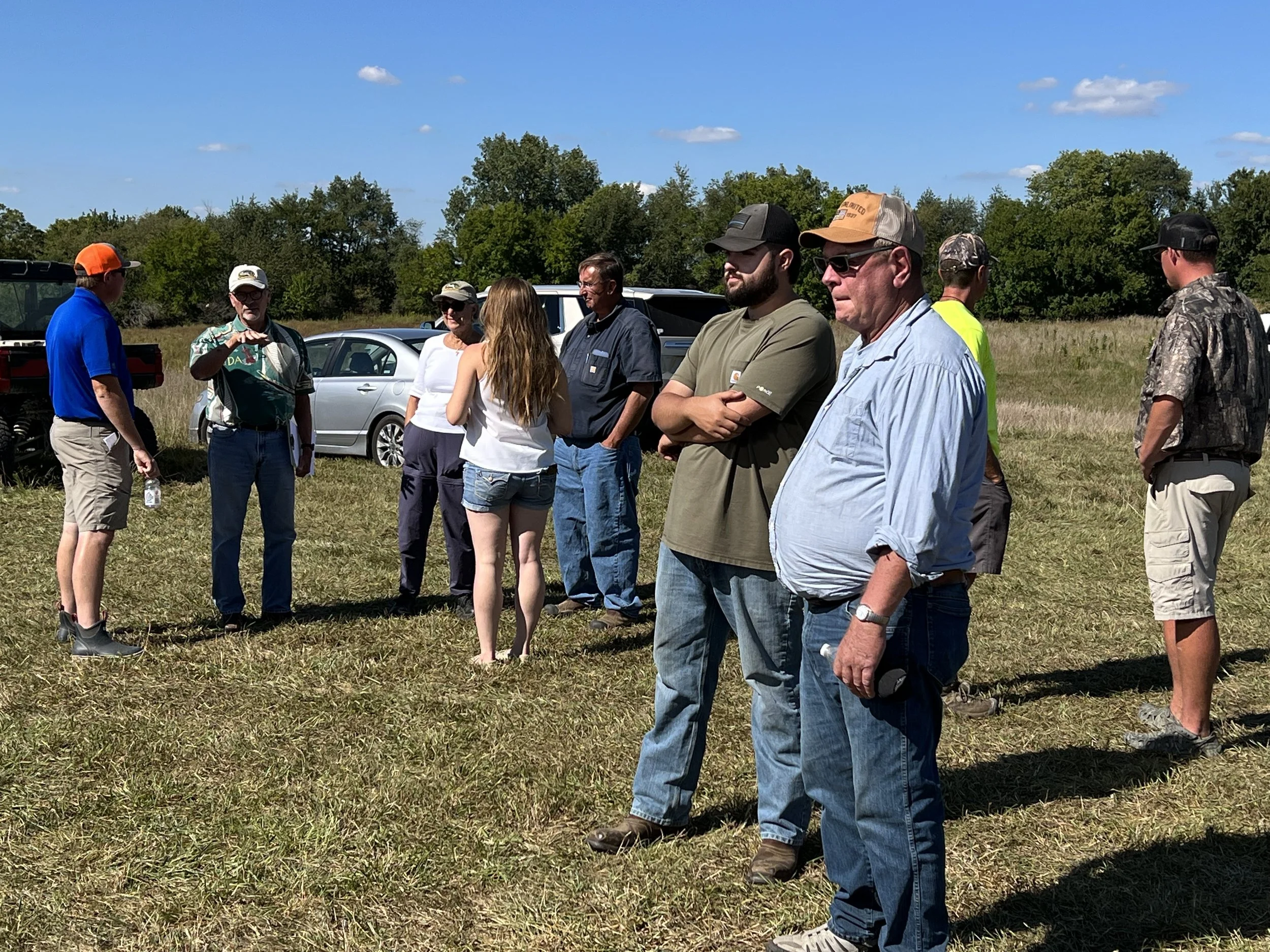
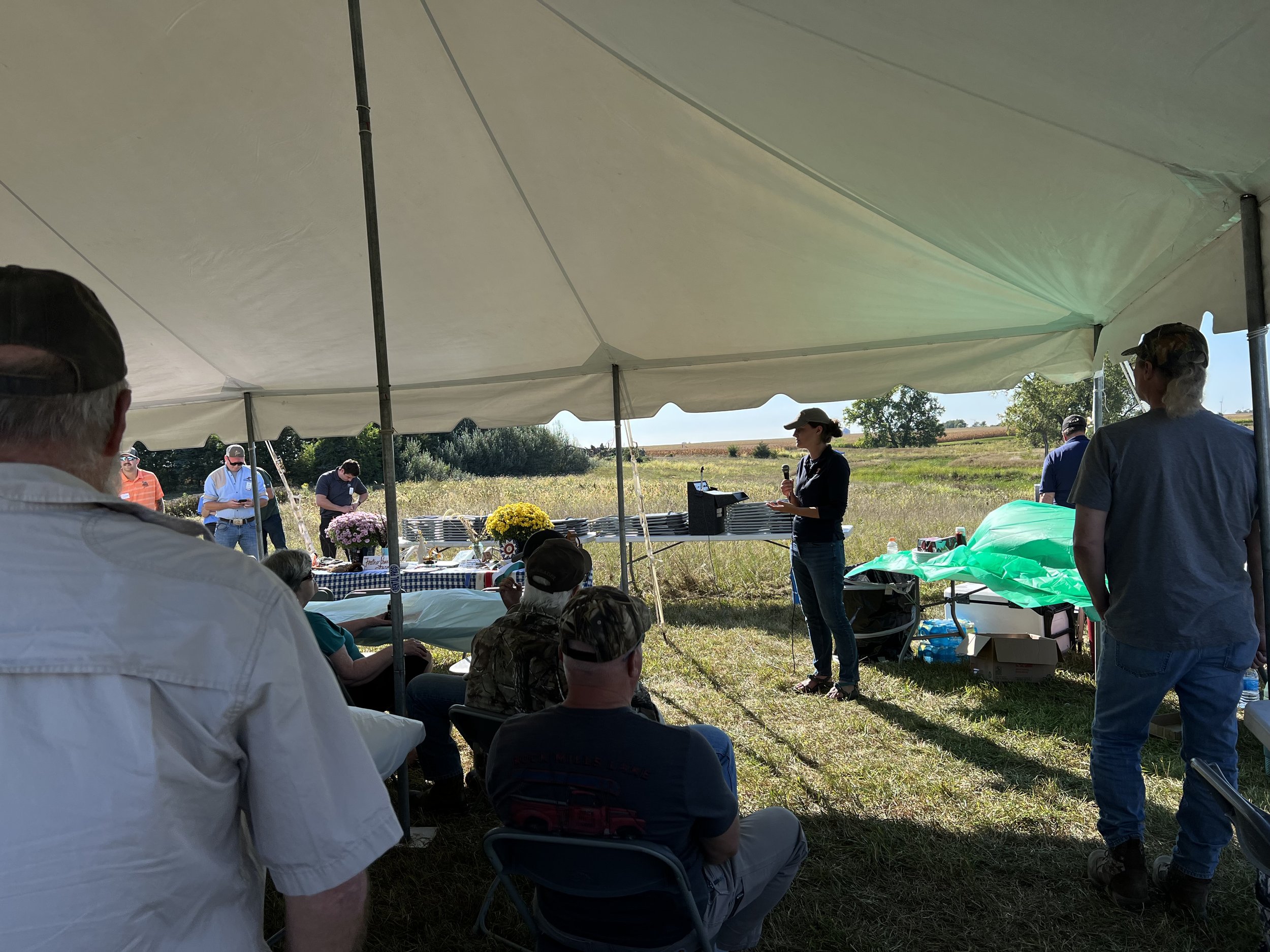
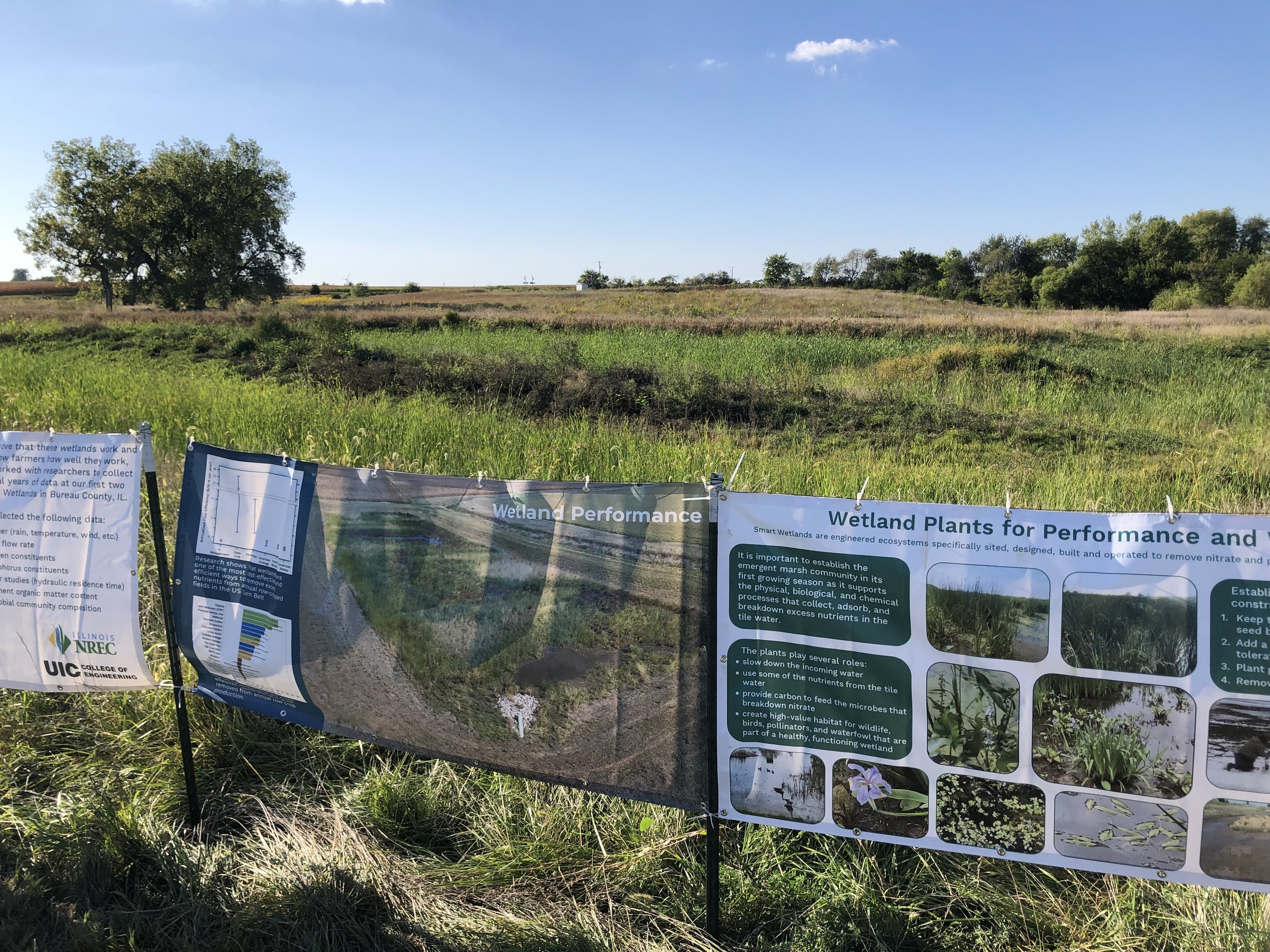
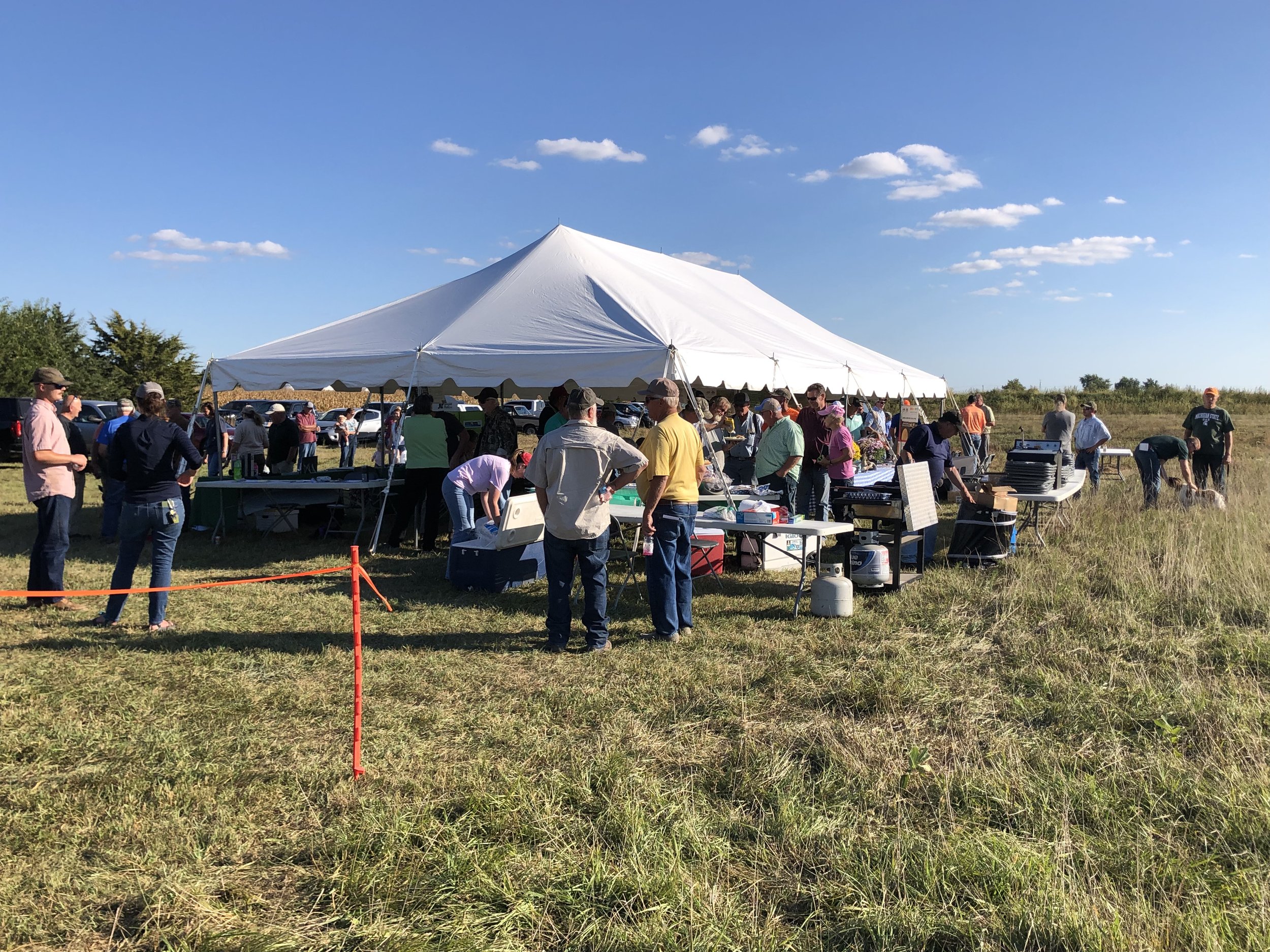
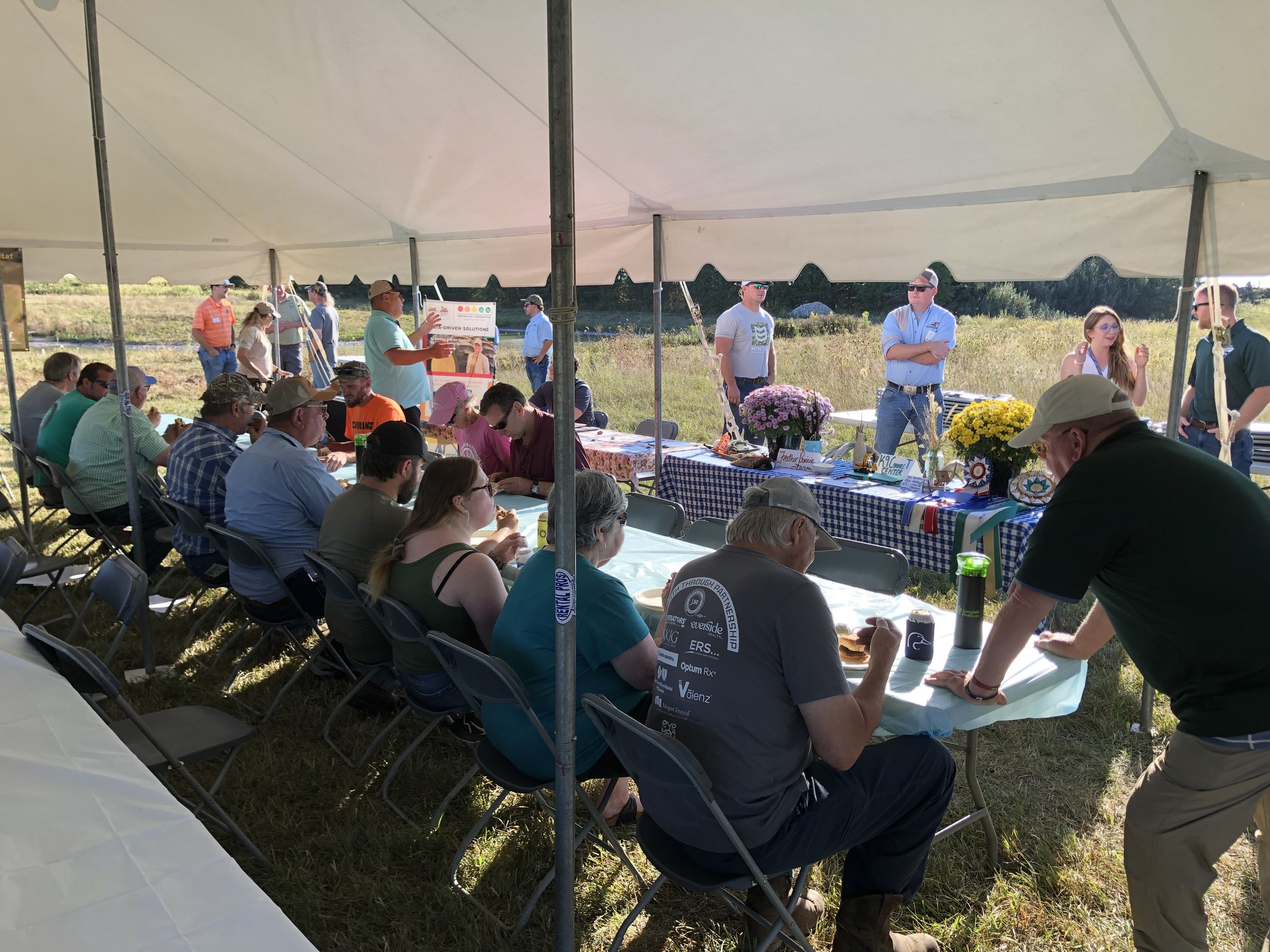
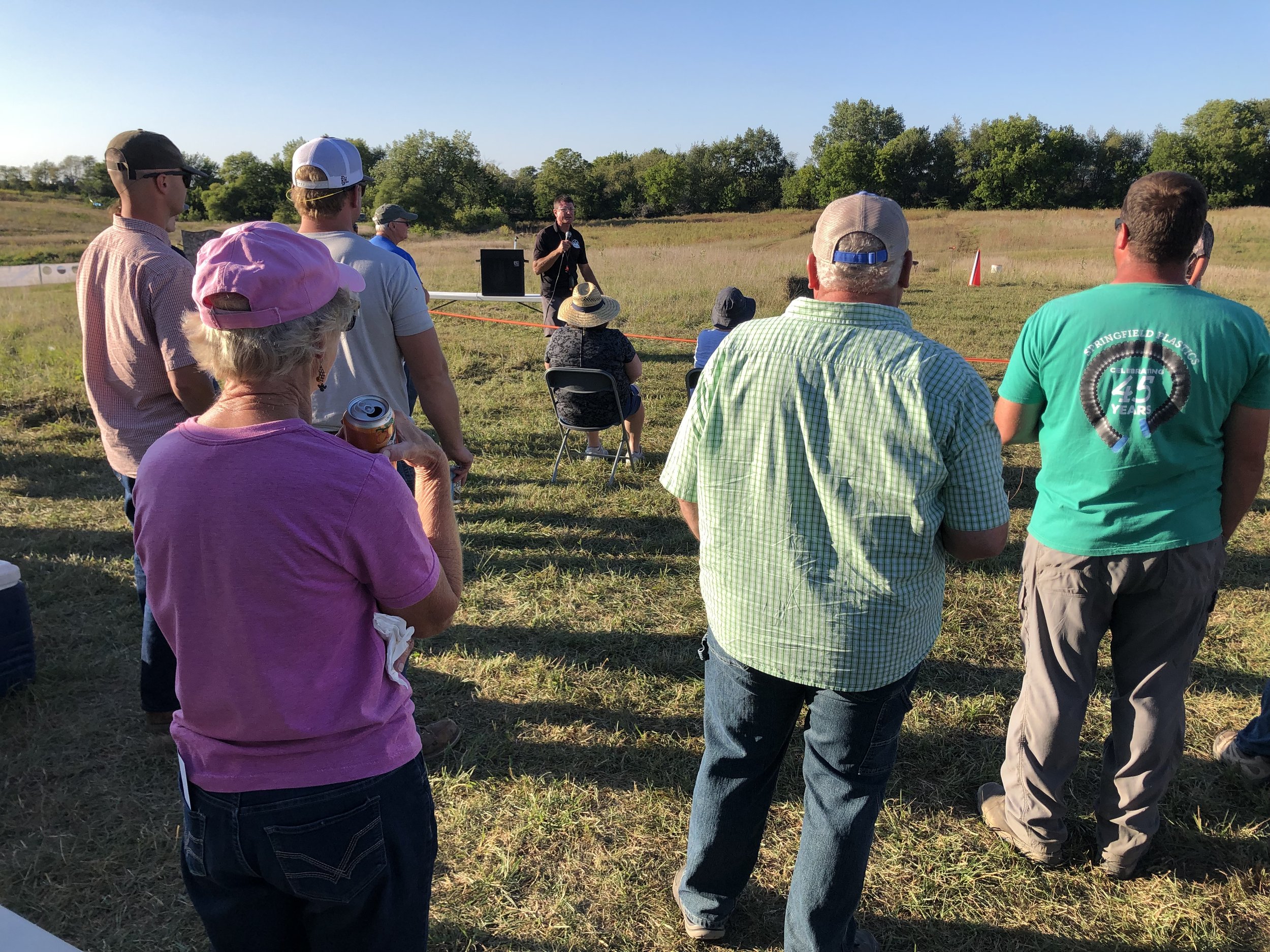
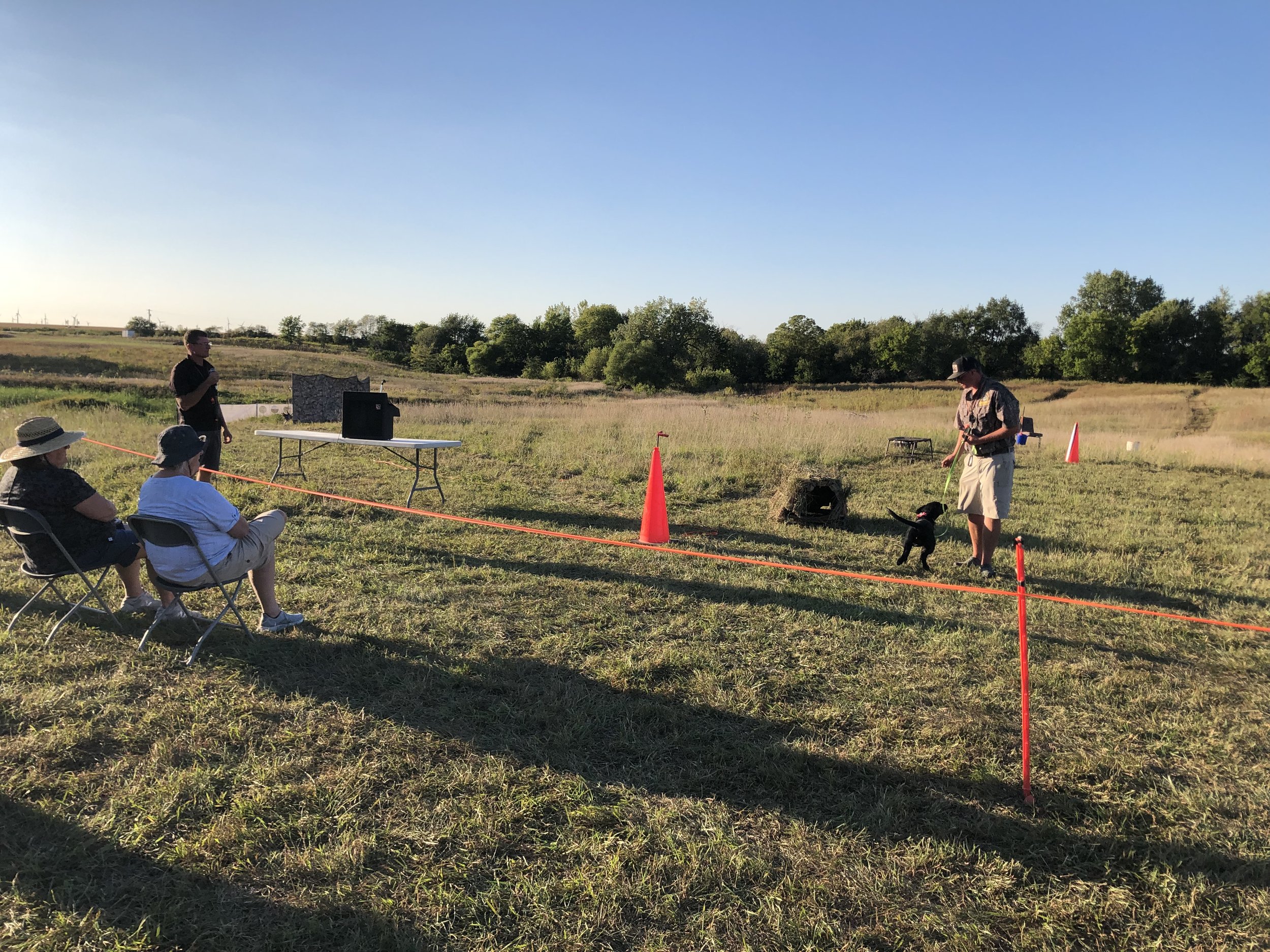
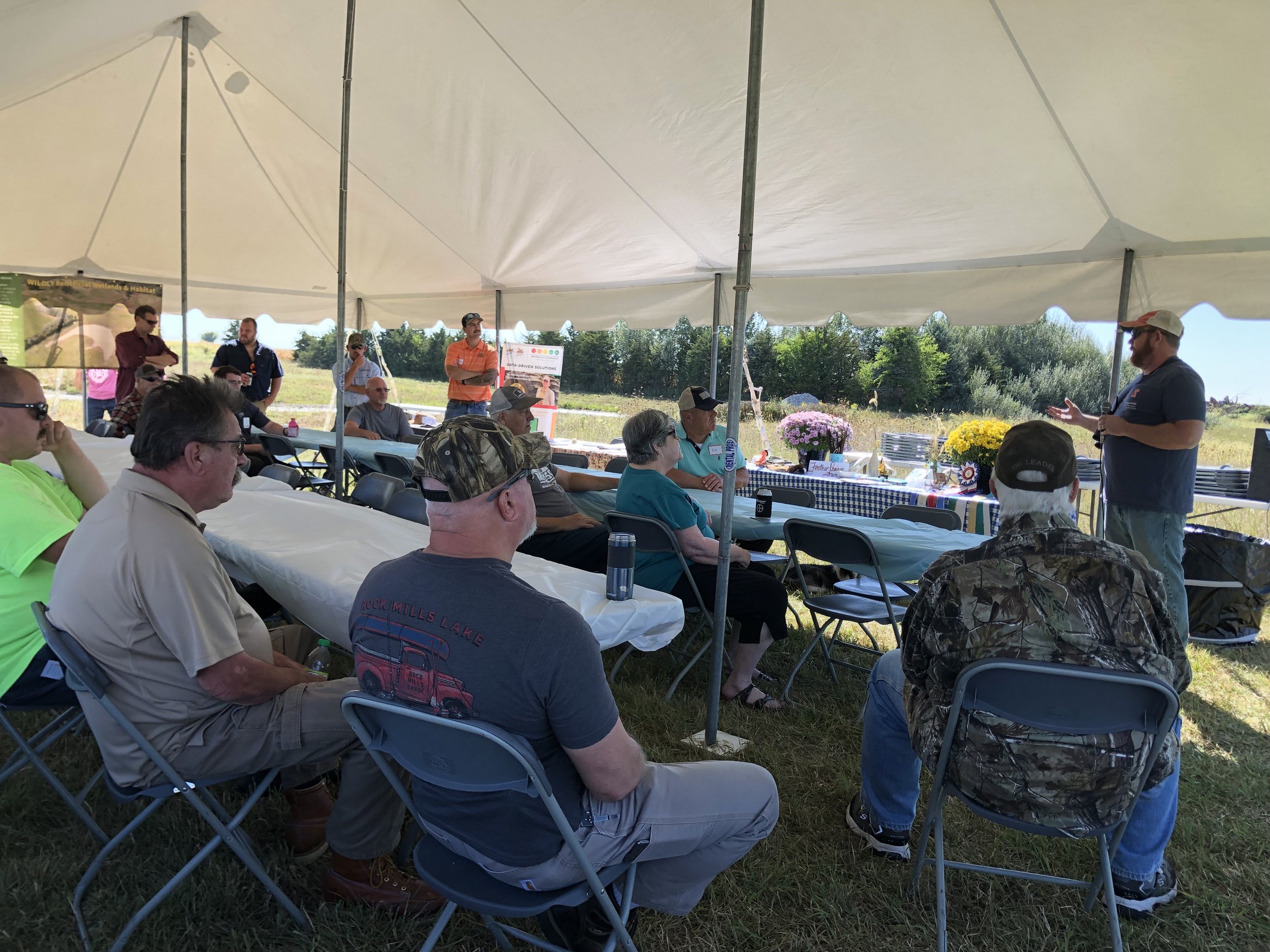
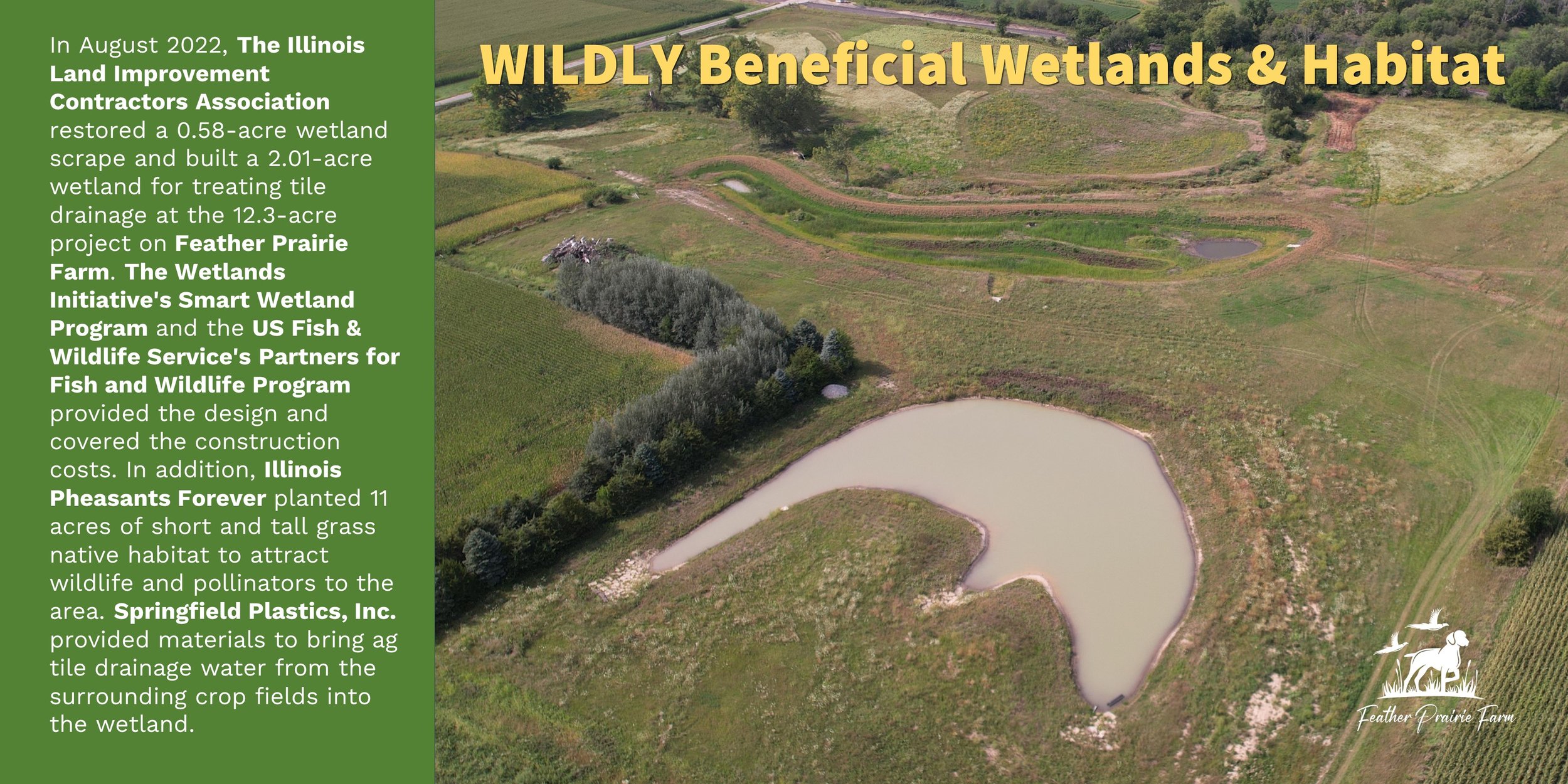
Hunters, hunting dog trainers, and landowners enjoyed a field event at Feather Prairie Farms near Dwight, IL, in mid September. In addition to touring ag tile treatment and restored wetlands, visitors heard Univerisity of Illinois researchers Dr. Mike Ward and Dr. Auriel Fournier discuss upland birds, waterfowl, and wetland management. Following dinner, Dan Irhke of Gun Dog Success discussed how to evaluate a puppy to determine if it has the right attributes to become a great hunting dog and then demonstrated how he and his staff train dogs to be hunting companions.