Wetland Plants: Beautiful and Hard-working

This week, let’s take a closer look at the most visible part of wetland ecosystems, which grows from hydric soils: wetland plants! Wetland plants can be called hydrophytes, aquatic plants, or macrophytes. They are species that can live in wet places, such as saturated soils, flooded soils, submerged in water, or on the water’s surface. Wetland plant species have the ability to thrive in wet and anaerobic (lacking oxygen) soil conditions due to physical or morphological adaptations, tolerances, and life history strategies.

Where a particular wetland plant lives is based on the amount of water that is present. Marshes usually have a gradient that moves from open water to saturated soils to drier upland soils. As the water levels change, so does the plant community composition.

Wetland plants play several important roles in a wetland ecosystem. Here are some of them:

  1. Wetland plants are the base of the food web, providing both food and habitat for microbes, algae, insects, fish, birds, waterfowl, and mammals. The types of wetland plant species and the quantity of those species influence the overall diversity of a wetland community.

  2. The plants impact the movement of both water (hydrology) and sediments. The plants can slow the water flow, reducing the effects of erosion and flooding, lessening the impact of waves, and stabilizing shorelines.

  3. Wetland plants strongly influence water chemistry. They can uptake nutrients from the water and move compounds from the sediment into the water column. They can improve water quality by absorbing nutrients, metals, and other contaminants.

In our Smart Wetlands, the plants play a critical role in nutrient removal. It is not necessarily through nutrient uptake, as nitrogen removal by plants may account for only 12–14% of the total amount; however, they provide the substrate and food source for the microbes that are transforming nitrate into dinitrogen gas (N2). The plants also provide the carbon that serves as the food or energy source for the microbes. Finally, vegetation helps with slowing down the inflowing tile water, settling out any soil particles, and distributing the water as it flows from the inlet to the outlet.

The plants that thrive in a Smart Wetland are those species that can tolerate the high nitrogen loading from the tile water, establish quickly, reproduce at the designed water depths, and survive the changing water levels (0-36”) throughout the year. The Wetlands Initiative seeds or plants several different native species in our Smart Wetlands, as we want to establish resiliency in the wetland to the varying conditions as well as bring back the wildlife habitat benefits that come with a diverse plant community.


The Illinois native wetland plants that are appropriate for a Smart Wetland include arrowhead (Sagittaria latifolia), common threesquare (Schoenoplectus pungens), prairie cordgrass (Spartina pectinata), common or soft rush (Juncus effusus), hardstem bulrush (Schoenoplectus acutus), softstem bulrush (Schoenoplectus Tabernaemontani), dark green rush (Scirpus atrovirens), giant bur-reed (Sparganium eurycarpum), common water plantain (Alisma subcordatum), tussock sedge (Carex stricta), and blue-flag iris (Iris virginica var. shrevei). The names in bold are those that are recommended in the NRCS Conservation Practice Standard for Constructed Wetlands for Cropland Drainage Water Treatment (CPS 656). The practice standard also recommends broad-leaved cattail (Typha latifola), which we don’t recommend as this species can quickly overtake the entire wetland, essentially forming a monoculture, which requires much more management to control its spread. You learn more about these plants and other wetland plNts found in Illinoi at: https://www.illinoiswildflowers.info/wetland/wetland_index.htm 

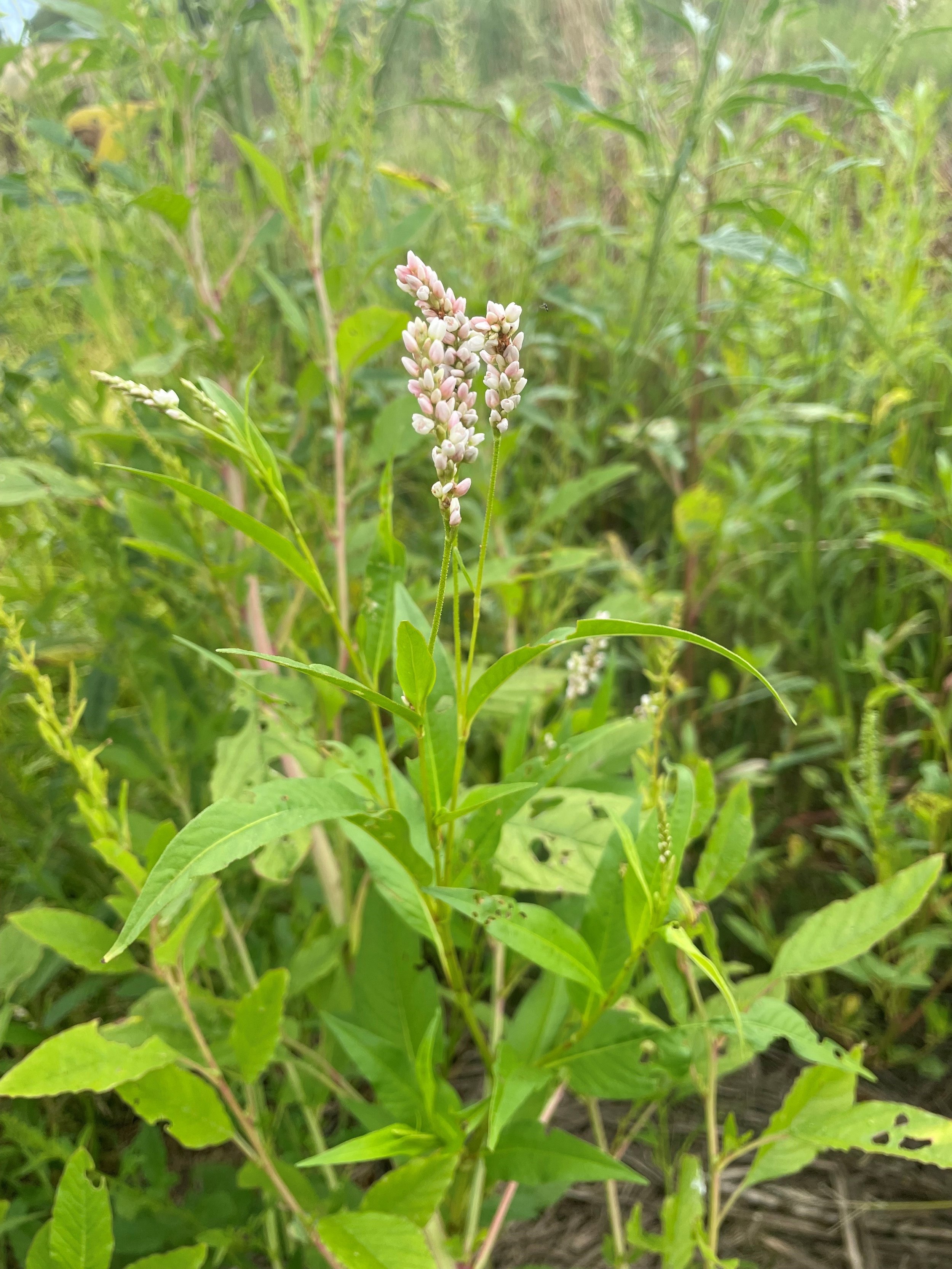
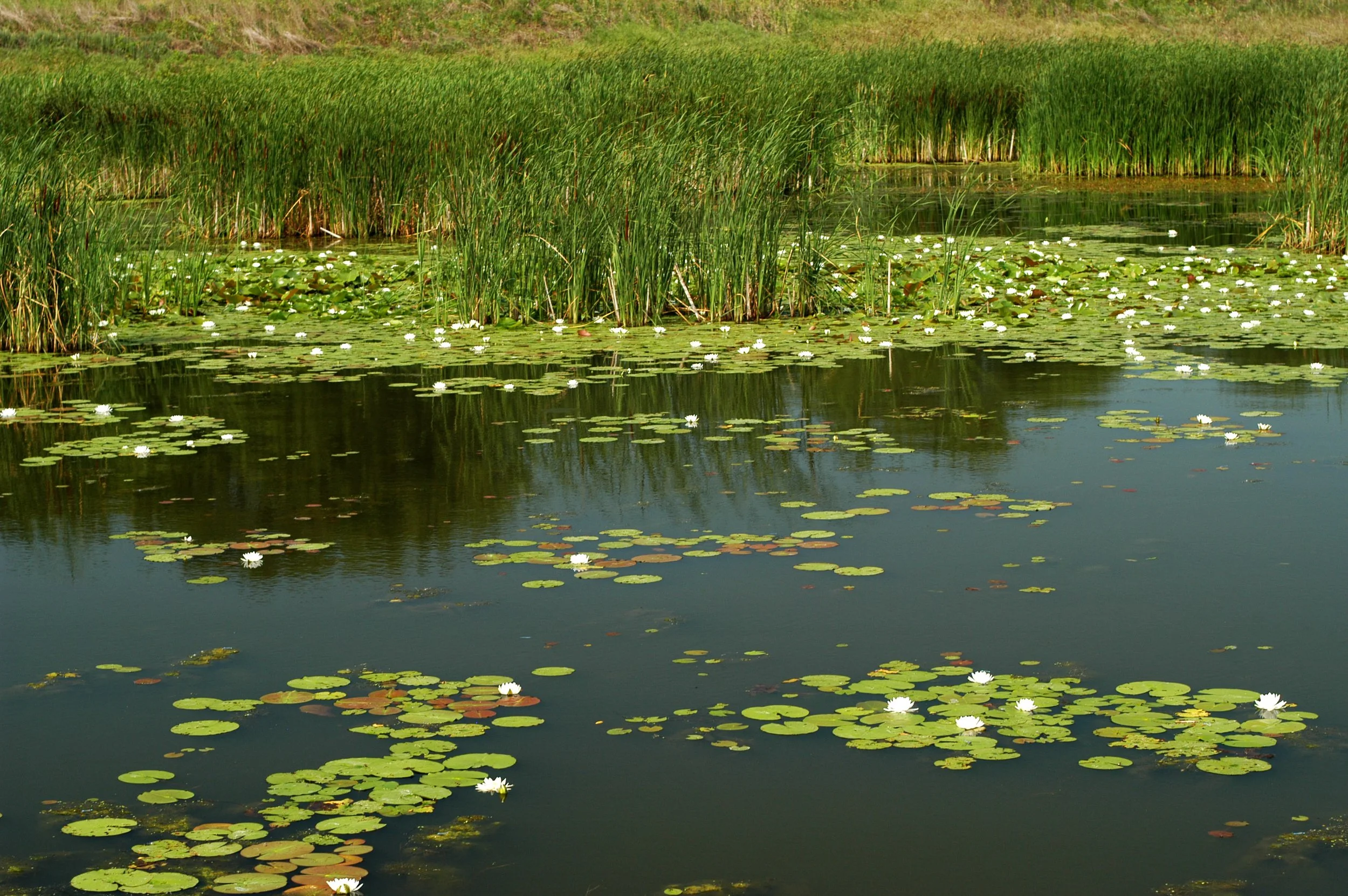
Here are some images of beautiful and hard-working wetland plants from our Smart Wetlands.

Jill Kostel leads the project team as TWI's Senior Environmental Engineer and primary designer of Smart Wetlands. She also works to develop new partnerships to help spread constructed wetlands widely in Illinois.

Support for developing this blog was provided by the Mississippi River Network. Consider becoming a River Citizen to help “clean up and protect our country's greatest River.”

What are hydric soils?

There are two basic categories or “buckets” of soils in our Smart Wetlands world: hydric or upland. A hydric soil bucket holds soils that are saturated, flooded, or ponded long enough during the growing season to develop anaerobic (or low to no oxygen) conditions. All other soils go in the upland soils bucket.

Hydric soils are created when upland soils become saturated under high water table conditions. The still or slowly moving water combined with the microbe communities that decompose soil organic matter create low-oxygen conditions.

The conditions that create hydric soils also create wetlands—so hydric soils are wetland soils.  Hydric soils are one of the three key defining characteristics of wetlands along with hydrology and water-loving (hydrophytic) plants. Those depression areas in your farm field that are wet most springs likely have hydric soils, whereas the rest of the farm that is dry all year has upland soils.

The interesting thing about hydric soils is that they develop specific characteristics over time when they have been continuously waterlogged for short periods (a couple of weeks) during the growing season. These characteristics remain even after the soils dry.

If you look for the signs, it is easy to identify former wetland locations on cropland, even the areas that have been tile-drained. The indicators are specific soil colors (gray or bluish to greenish-gray), muck or soils with highly decomposed organic matter, sulfur or rotten eggs odor, and iron reduction (rust) deposits. Hydric soil indicators are key to your farm’s wetland determination of prior converted or farmed wetlands.

A close up of hydric soil
The three views of this soil provide some clues that this is hydric soil. The first is the soil color – it is bluish-gray. Another clue is that the water table is high (within 2 feet of the surface). The final clue is the small piece of clay tile shown in the second photo. That tile means it was likely saturated soil and in order to farm it, the landowner had to install tile drainage.

As an engineered ecosystem, constructed or tile-treatment wetlands can be built on upland or hydric soils. Since the upland soils will be underwater or at least saturated throughout the year, they will develop characteristics typical of hydric soils over time. But having hydric soil as the base for a constructed wetland definitely has its advantages.

The hydric soil will have the seed bank of the wetland plants that once grew there, even after being farmed, and may still have the microbial communities and soil chemistry needed for certain wetland processes. Hydric soils can have higher soil carbon than non-hydric soils. The presence of soil carbon is needed for several wetland processes such as denitrification, which we rely on to convert the nitrate in the tile water to harmless nitrogen gas in our Smart Wetlands. So, when a tile-treatment wetland is built on hydric soil, it can get to work faster and more efficiently to remove excess nutrients.

If you think an ag tile-treatment wetland could work as part of the tile-drainage system on your Illinois farm, please complete this form.


Mucky stuff
The material in this photo contains more than 50% of undecomposed plant material so it is considered peat. If the plant organic matter was between 20-50%, it would be considered muck.

Jill Kostel leads the project team as TWI's Senior Environmental Engineer and primary designer of Smart Wetlands. She also works to develop new partnerships to help spread constructed wetlands widely in Illinois.

Support for the development of this blog, photos and videos was provided by Mississippi River Network. Consider becoming a River Citizen to help “clean up and protect our country's greatest River.”
Is it a Constructed Wetland or a Restored Wetland?

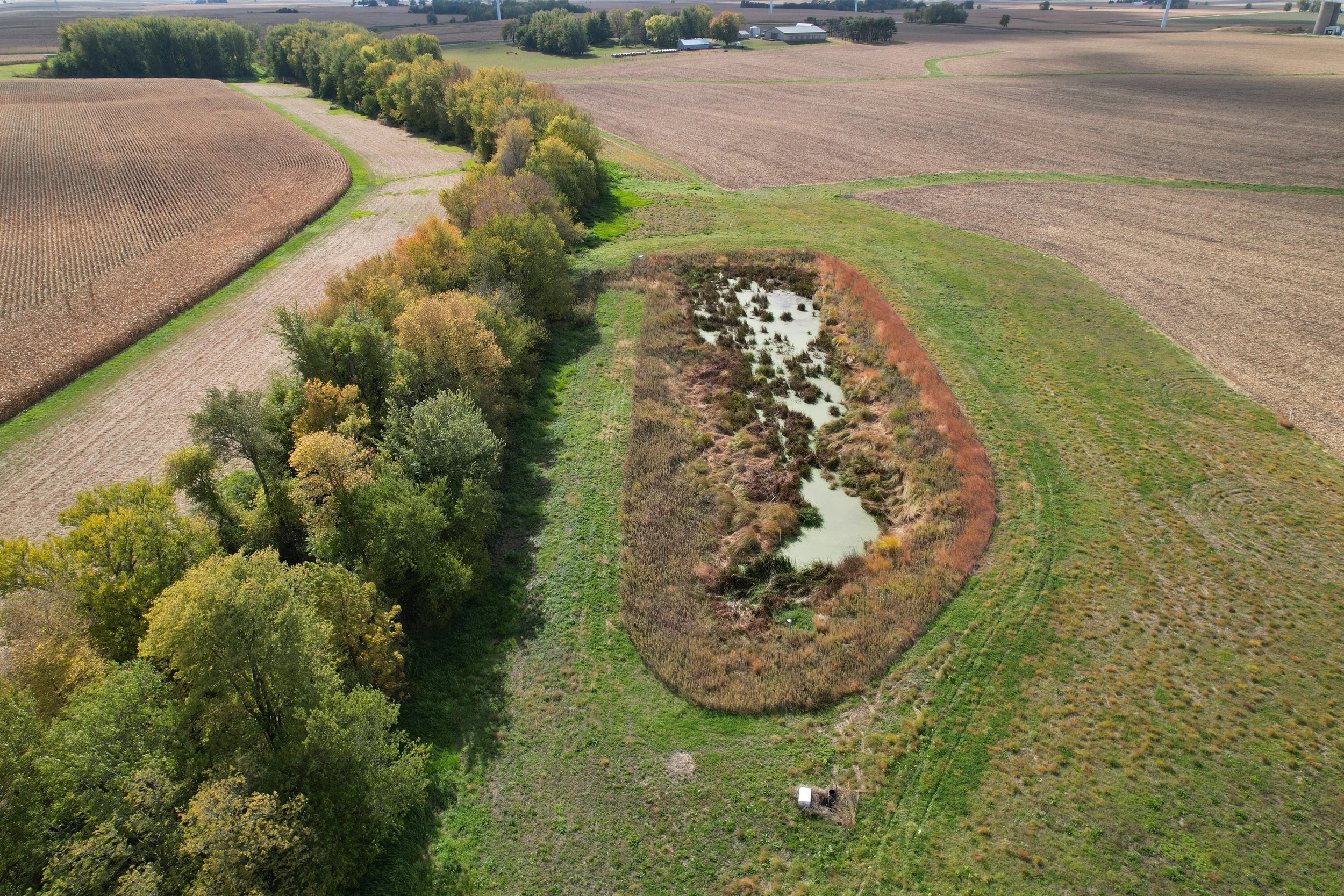
At the microbial level, from a frog’s perspective, or a muskrat’s viewpoint there is not much difference between a restored wetland and a constructed wetland. Both wetland ecosystems provide the conditions for key wetland functions such as water quality improvement, floodwater storage, wildlife habitat, and recreational opportunities. However, at ground level, and especially from a bird’s-eye view, there are clear differences in layout and design purpose.

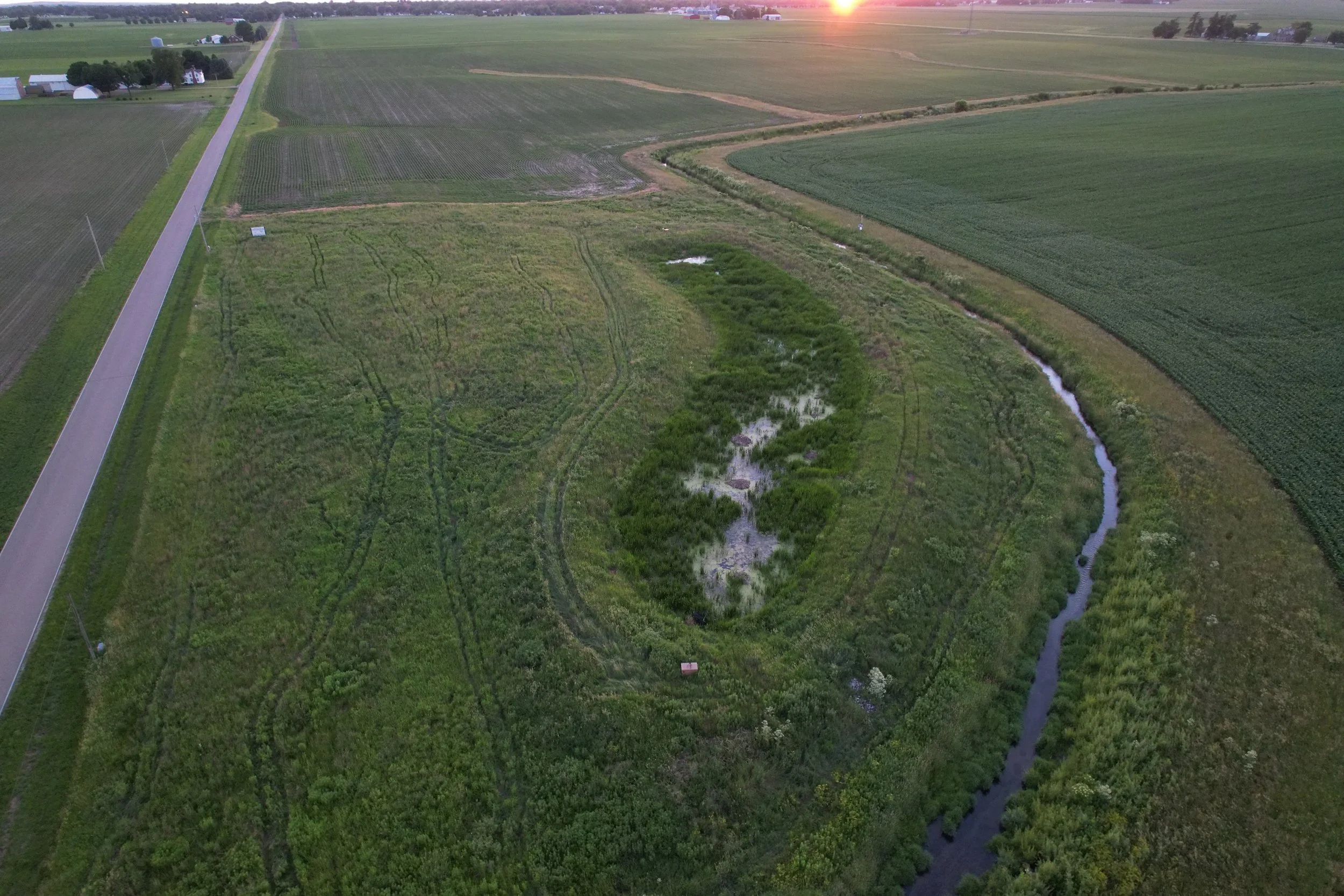
This is a recent photo of the Wetland’s Initiative’s first Smart Wetland. Built in the summer of 2015 it is located in Bureau County, IL.

In a satellite image, constructed wetlands or tile-treatment wetlands typically do not appear to be natural forms within the agricultural landscape, as they often have linear shapes, are surrounded by small dirt banks separating them from the surrounding cropland or dividing multiple wetland cells, and have specially designed interior ridges or islands. These wetlands are not natural systems that have developed over time, but instead, they are designed or engineered wetland treatment systems that use natural wetland processes involving the vegetation, soils, and their associated microbial communities to improve water quality.

Specific design aspects of constructed wetlands provide the conditions needed for maximum water quality improvement. For example, to “optimize” the removal of excess nitrate-nitrogen (the main pollutant in tile drainage) the water depth should be consistently between 12-18”. This depth promotes an emergent marsh vegetation community, supplies the maximum soil-water contact, and creates low-to-no-oxygen levels at the water-sediment interface, which are all needed to promote the conversion of nitrate to dinitrogen gas by denitrifying bacteria.

Restored wetlands are areas that were originally wetlands, but the hydrology, vegetation, or soils were altered or degraded by humans. The presence of hydric soils (soils developed under saturated conditions) indicates the areas that were formerly wetlands. Wetland restoration establishes conditions and functions similar to the original wetland before the disturbance.

The design goal is to restore hydrology, topography, native vegetation, and natural processes. Wetland restoration typically focuses on developing habitats to support a variety of plants, insects, amphibians, reptiles, birds, waterfowl, and mammals. Restored wetlands blend into the surrounding landscape, as they are a continuum of integrated habitats with an overlap between different plant communities as water depths change.

Constructed wetlands can be created on land that was never a wetland or on former wetlands that are now farmed. Like a restored wetland, native hydrophytic vegetation (“water-loving” plants suited to grow where it’s wet) will be planted or seeded, and the microbes and wildlife communities adapted to these wet conditions will flourish over time. However, the diversity of plants is limited to those species that are tolerant of high nutrient levels and varying water levels (flooded to dry periods). Smart Wetlands are constructed wetlands, as Smart Wetlands are designed and sited specifically to capture and treat cropland tile drainage runoff.

See if you can spot which wetlands are constructed or restored.

Support for the development of this blog and video was provided by the Mississippi River Network. The Mississippi River Network (MRN) is a coalition of 58 organizations dedicated to creating a healthier Mississippi River by working for the well-being of the people, land, water, and wildlife of America’s largest watershed. The Wetlands Initiative is a proud member of this organization.